El Bombero 221
Posted on
November 04, 2017 by
Chris Cairns

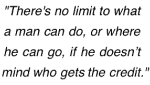
This is the former Labour UK government minister, socialist and internationalist Brian Wilson in the Scotsman today, gloating and crowing that the democratically-elected government of Catalonia has been deposed and imprisoned (the latest in a series of arrests and jailings of leaders of the independence movement) for seeking to discover the will of the Catalan people in a referendum, in accordance with the mandate they were elected on – an act Wilson somehow contrives to describe as “tyranny”.

Wilson, whose Twitter avatar is a picture of himself with Fidel Castro, asserts that the Spanish government’s literally fascist coup and oppression of its people is a “lesson for Scotland”. We doubt we’re alone in finding that view chilling.
We’re clearly going to have to make this a regular feature.

And it’s not as though the competition isn’t stiff.
We’re not a Catalonian-politics website and we don’t even have an opinion on whether Catalonia should be independent, but sometimes it’s easier to understand the workings and failings of the media if you watch how it behaves on a subject you’re not directly and closely involved with. Last week was one of those weeks.
Below is a clip from yesterday’s edition of Sunday Politics Scotland. It features a man called José Rodriguez Mora, who was introduced to SPS viewers neutrally as simply an academic from Edinburgh University but was in fact instrumental in the creation of a stridently anti-independence Catalonian political party.
He was brought on to give voice to what has become the universal UK-media spin on events in Catalonia – that both sides are to blame, that the Catalan government was provocative and irresponsible to call an “illegal” referendum, and that the only way for the area to achieve independence is through the 1978 Spanish constitution, despite it expressly forbidding any such action and its cornerstone of existence (also known as the “Preliminary Title”) being “based on the indissoluble unity of the Spanish Nation”.
So in the striking absence of any useful information in the press, we thought we’d do a little digging and see how that might work.
Percentage of A&E patients in Scotland in 2017 to date seen within four hours (target 95%), described by Labour MSP Colin Smyth as a “deeply troubling” figure: 94%

Percentage of the vote on which Mr Smyth was elected as an MSP in 2016: 8.9%
There’s so little happening in Scottish politics news today that we had to read David Torrance’s column in the Herald, and we must say we ended up pretty confused.

Not by the fact that it was a free half-page advert for a new Unionist “thinktank” set up by an angry unsuccessful dogfood salesman readers may be familiar with – there were no surprises to be found there from either Torrance or the Herald – but by the thinktank itself, which doesn’t seem to know its Arsenal from its Devil’s Elbow.
Yesterday we noted the remarkable lack of coverage in the Scottish press about the workforce at BAE Systems in Govan being stabbed in the back yet again over UK government warship orders, with five Type 31 frigates promised to the yard (to replace five more expensive Type 26s) now going to Merseyside instead.
We claimed that newspapers including the Record had completely ignored the story in their print editions (and in most cases online as well), but an alert reader pointed out that it fact the Record HAD featured it, and we’re happy to correct our error.
Here it is, on page 14:

Did you spot it?
With the matter of the UK government’s orders for warships to be built on the Clyde having been such a vexed and contentious one over the last few years, you’d think that any significant developments in the story would be big news in Scotland.

So yesterday, when it was revealed that BAE systems definitely wouldn’t be building the five cheaper Type 31 frigates – which had replaced the originally-promised Type 26s – in Scotland, in a move which the shipbuilding unions described as a “betrayal”, we sat back and waited for the Scottish media’s outraged blanket coverage.
We didn’t really, of course. We’re not idiots.
Investigative site The Ferret this afternoon published a report into the Scottish Futures Trust, the SNP’s replacement for Labour’s cripplingly costly PFI projects.

The report was undertaken by Jim and Margaret Cuthbert, a pair of economists well regarded in nationalist circles, and makes some interesting if vague comments about downsides that MIGHT, in theory, exist in the SFT now or in the future.
The headline claims are all full of highly-qualified language (“may not deliver value for money”; “profits may be unduly high”; “could restrict growth”; “potentially has adverse implications”; “impossible to tell whether“), and it’s a long way down the page until you get to anything approaching a hard fact, or indeed the revelation that the report seems to have been paid for by Scottish Labour.
And that’s when things get a little weird.
We long ago gave up expecting any sort of principled consistency from the Scottish Tories. Whether it was Ruth “line in the sand, no more powers” Davidson magically morphing into a champion of extended devolution, or suddenly reversing her position on free prescriptions, the party is now almost as fluid on policy as Scottish Labour.
The underlings, of course, dutifully follow their leader’s example. Readers familiar with Adam Tomkins’ remarkably rapid journey from fiery pro-independence republican to an ultra-Unionist ultra-Conservative monarchist will, we suspect, barely have batted an eyelid this morning as he unblinkingly performed a full 180-degree turn on the concept of universal basic income.

Even though as recently as this January he was full of admiration for it:

And he’s not alone.
The Guardian today on Ruth Davidson’s legendary commitment to the day job:

And an action shot of those packed-in crowds two weeks ago:

We hope nobody was injured in the crush.
Wings Over Scotland is a thing that exists.