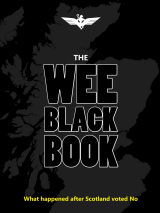
Let there be no mistake about what just happened. Last night, Scottish devolution – an institution 111 years in the promising, just 19 years a reality – died. Iain Macwhirter summed it up concisely and accurately.
The Sun (English edition only, the Scottish one goes for a domestic murrdurr story) has an inflammatory front page today, as Parliament debates the most important series of votes so far on Brexit, including one to overrule devolution.
It’s a rerun of a(n in)famous previous front-page illustration from the paper, which you can see below. But there’s something odd about it.
It’s probably fair to say that the voters of Scotland have been feeling a little put-upon lately. In the last decade they’ve been sent to polling stations on no fewer than 12 occasions (Holyrood elections in 2011 and 2016, UK elections in 2010, 2015 and 2017, council elections in 2012 and 2017, European elections in 2009 and 2014, and finally referendums on AV, independence and the EU).
And they’ve been subjected to endless weeks, months or even years of campaigning and haranguing each time. One woman – who only had to endure nine of those 12 – had famously had enough of it.
Yet Scots face possibly three more in the next 12 months or so, if various factions get their way, taking the total to 15 major votes in a decade. And if we want to secure the desired outcome in any of them, we’re going to have to ease the load on folk a bit.
This Wings story from April about a wildly untrue Scottish Daily Mail front-page splash has been entirely vindicated by a correction in the paper today, conceding both of the key complaints we made in our piece.
The Mail has, as you’d imagine, printed the correction rather smaller than the original story, so we thought we’d blow it up a little here for easier reading.
Because we’re sure they wouldn’t want anyone to miss it.
Some new data from the long-running Scottish Social Attitudes Survey was released tonight, and it makes for fascinating reading.
The headline stat is that for only the second year in the 18 years the study has been running, independence is the most popular option for the governance of Scotland:
This doesn’t, however, mean that it’s the majority view, because while independence is backed by 45% the “No” option is split into two – support for devolution (41%) and those ultra-Yoons who want Holyrood abolished (8%).
Now, considering that as recently as 2012 those figures were independence on 23%, devolution 61% and no Parliament 13%, that’s still a remarkable shift in Scottish public opinion in a very short space of time – support for indy has DOUBLED in five years while devolution has dropped by a third.
And indeed, when the survey asked a straight Yes/No question the results came out even closer, at 48% Yes to 52% No – a 3% swing to Yes from the 2016 figures.
We must admit, folks, that our initial reaction to this Scotsman headline from a couple of days ago was simply a weary sigh of “Oh FFS, here we go again”.
Blaming the Scottish Government for a private company’s decision to close down its plant and make hundreds of Scottish workers redundant is just the sort of ludicrous negative spinning we’ve come to expect from the country’s press over the past seven years, so this latest example just seemed like nothing more than par for the course.
But there turned out to be a little more to it than that.
So this story is the front page of tonight’s Evening Times.
It’s a pretty slim piece deploying a Glasgow mother to attack the SNP-run city council over a recent increase in nursery fees, and it sounds like the new higher cost might be a pretty big deal to her.
And no, we don’t even mean the FOUR spelling mistakes in this 42-word tweet.
We mean the bit that we’ve highlighted above in blue. Because what Scottish Labour’s lowest-watt bulb was gloating about earlier today was that Lord Bracadale concluded there’d been no gap created in the law by the Kelly-driven abolition of the OBFA.
And that’s… well, that’s not quite what Lord Bracadale said.
Geri on Do You Believe In The Westwood?: “The EU was always going to get rid of him, by hook or by crook. He just wasn’t playing ball…” Apr 12, 22:00
Frank Gillougley on Do You Believe In The Westwood?: “Meanwhile, back at the ranch, here in sunny Hungary, Orbán concedes and Tisza will pass the 2/3rds majority needed to…” Apr 12, 21:42
Hatey McHateface on Do You Believe In The Westwood?: ““There’s a very good reason the whole world hasn’t joined in with this madness” Sure, feart of the followers of…” Apr 12, 21:40
Geri on Do You Believe In The Westwood?: “LOL! I asked myself that same question when it comes to UK elections & Brexshit referendum. Why does Pam fae…” Apr 12, 21:28
Hatey McHateface on Do You Believe In The Westwood?: ““the Greens 11 seats” Was that before or after the Green quine announced that a Green Scotland will dig deep…” Apr 12, 21:22
Geri on Do You Believe In The Westwood?: “First off – let’s remind the group these are war crims. An unjust & illegal act of aggression. There’s a…” Apr 12, 21:20
Hatey McHateface on Do You Believe In The Westwood?: ““The tech Mafia will make their own version of obedient human” Truly it is as if you are completely unaware…” Apr 12, 21:15
Geri on Do You Believe In The Westwood?: “Aye, aye, Captain fckwit. Y’all will be swimming with the fishes in nae time. Mind wear yer armbands! Unleash the…” Apr 12, 21:09
Hatey McHateface on Do You Believe In The Westwood?: “Oh dear, Geri, you’ve just provided two reasons for them to disappear you. The first is you’ve gone public. Doh!…” Apr 12, 21:04
Hatey McHateface on Do You Believe In The Westwood?: “Then again, “Rt Hon. Lord Barony” may simply be cultural misappropriation by somebody of Caribbean or Indian heritage whose parents…” Apr 12, 20:53
Geri on Do You Believe In The Westwood?: “Transhumanism. The tech Mafia will make their own version of obedient human.” Apr 12, 20:48
Hatey McHateface on Do You Believe In The Westwood?: ““Operation “Cutting your nose to spite your face””. I don’t see that. Blockading the towel heids exports in makes perfect…” Apr 12, 20:45
Hatey McHateface on Do You Believe In The Westwood?: ““should normally protect the sovereignty of the indigenous people, including those living abroad” Why should anybody care about the sovereignty…” Apr 12, 20:33
Alf Baird on Do You Believe In The Westwood?: ““the occupation of ALL of our top cultural, heritage, environmental, educational, etc. positions” Indeed, an Anglo cultural hegemony and hence…” Apr 12, 19:01
Lorncal on Do You Believe In The Westwood?: “The thing is, Heaver, that we just do not know for certain (although we can guess) why this is happening.…” Apr 12, 17:08
Lorncal on Do You Believe In The Westwood?: “The SNP has overseen a greater importation of people into our cultural and heritage, environmental and other nationally-important organizations than…” Apr 12, 16:48
Mark Beggan on Do You Believe In The Westwood?: “‘We send warships’ Is that right Vice admiral Loch and Load.” Apr 12, 16:15
Young Lochinvar on Do You Believe In The Westwood?: “Breaking! Von Trumphausen is going to block the Strait of Hormuz!! Operation “Cutting your nose to spite your face”.. So…” Apr 12, 15:52
Alf Baird on Do You Believe In The Westwood?: “A colonized people are ‘bystanders’in all regards, including when it comes to appointing a meritocratic elite from elsewhere to lead…” Apr 12, 15:16
Geri on Do You Believe In The Westwood?: “*under. I dunno why the gremlins decided to change that to understandable.” Apr 12, 14:05
Geri on Do You Believe In The Westwood?: “Yes James. Scotland has zero control over immigration. That’s understandable the control of the UK government along with all the…” Apr 12, 13:58
Geri on Not So Octopus: ““You’re deluded enough to think that the opinion of one KC is somehow conclusive or some slam dunk argument that…” Apr 12, 12:49
James on Not So Octopus: “Warmongering unionist agent; “…I DO actually represent mainstream opinion…” Big LOLZ. Distract, divide, derail. Rinse & repeat.” Apr 12, 12:31