Reaching out to Venus 144
Posted on
August 30, 2014 by
Chris Cairns

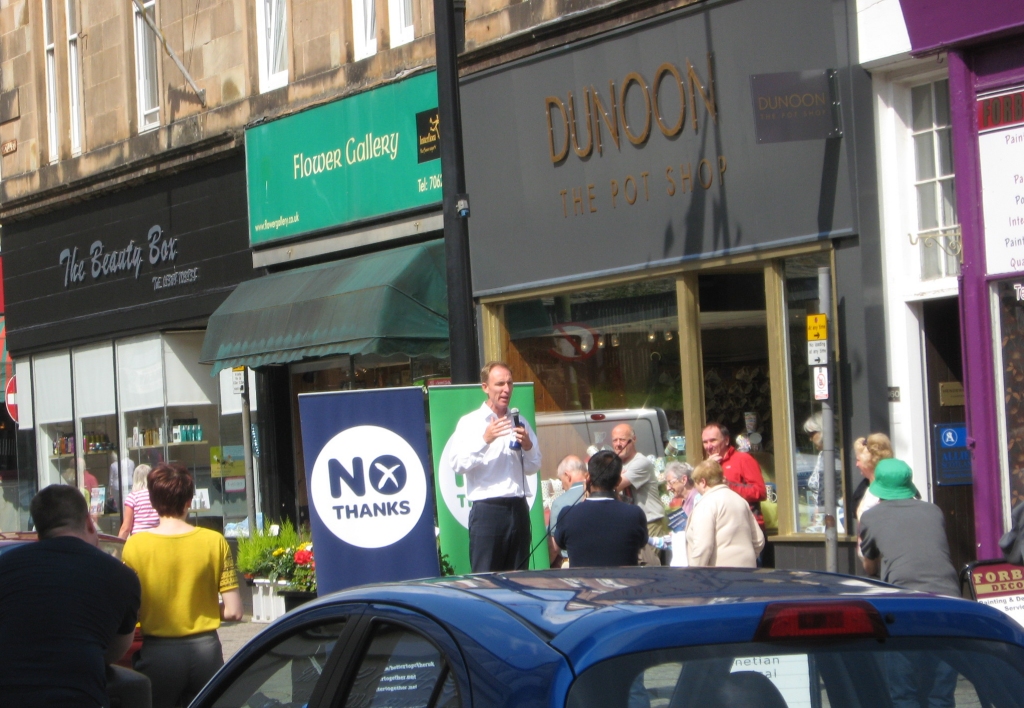
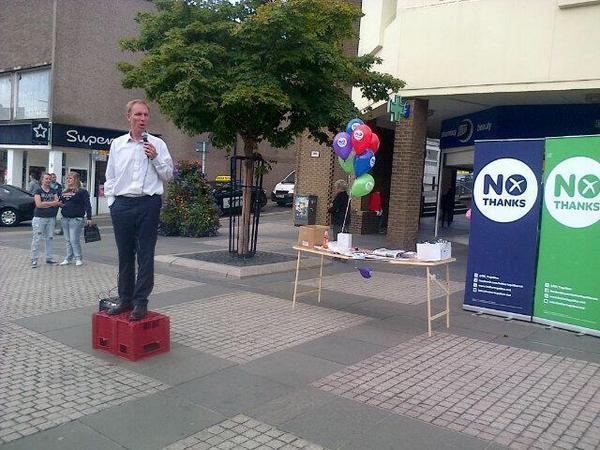
Earlier today we bemoaned some chump throwing an egg at Jim Murphy this week during his Shouting At Old Ladies In Shopping Centres Tour of Scotland, thereby enabling the Scottish press to enjoy an easy orgy of hypocritical “cybernat”-baiting. Murphy has unsurprisingly made the most of the incident, suspending the tour and bizarrely alleging that Yes Scotland is directly co-ordinating the abuse.
Egg-throwing is of course an act of protest rather than violence, and reactions to it tend to depend on whether you support the politics of the “victim” or not. (After all, the entire point of using an egg is that it’s fragile and breaks on impact, making a mess but doing no damage – insult rather than injury.)
This long-standing form of protest was treated as a national joke when someone did it to John Prescott – as was his actually violent reaction – and we don’t seem to remember anyone minding too much when it happened to Nick Griffin.

(For all his vileness, Griffin was a democratically elected politician just as Murphy is.)
Now, we actually have no way of knowing that this week’s culprit was a real Yes supporter rather than a stooge – it seems odd that with Murphy surrounded by so many Labour goons at every event and in a very public place, nobody managed to apprehend or photograph the assailant. But let’s apply Occam’s Razor and assume for the purposes of this piece that they were a genuine disgruntled opponent.
Because the question that then arises is “What else could they do?”
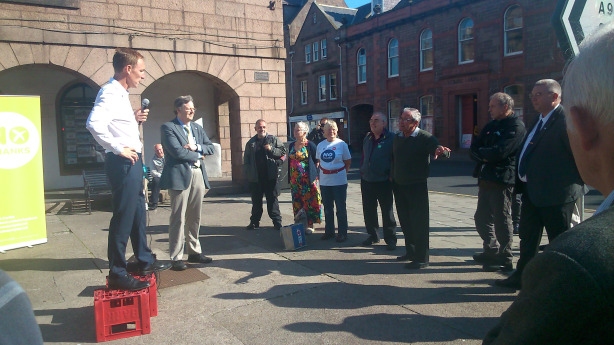
A couple of months ago we observed that Jim Murphy’s sparsely-attended tour of 100 Scottish street corners appeared to be mostly populated by Labour politicians and activists following him around multiple locations to pad out the, well, let’s call them “crowds”. It’s interesting to note that he now seems to have abandoned any pretence.

And it makes the point of the exercise a little hard to discern.
This is Polly Toynbee of the Guardian and Eddie Bone of the Campaign for an English Parliament in a remarkable nine minutes of “Good Morning Scotland” this morning.

It’s the nearest to sounding like a Yes voter you’ll ever hear James Naughtie. Enjoy.
One of the most commonly-observed facets of the independence referendum so far has been the lack of a real grassroots “Better Together” campaign, and as a historian of Scottish popular politics I’ve found myself pondering why there wasn’t one.

It’s not like there aren’t thousands of Scots who passionately believe in the Union and will be voting No, and are perfectly capable of arguing their case. We all know some – I certainly do, both family and friends. But there’s no organised grassroots campaigning of any serious note. Tiny handfuls of Labour activists, some of them shipped up from England and paid, have done almost all of the donkey work so far.
But as a historian of Scottish popular politics I should have an explanation, shouldn’t I? And when I had a think about it, something occurred to me.
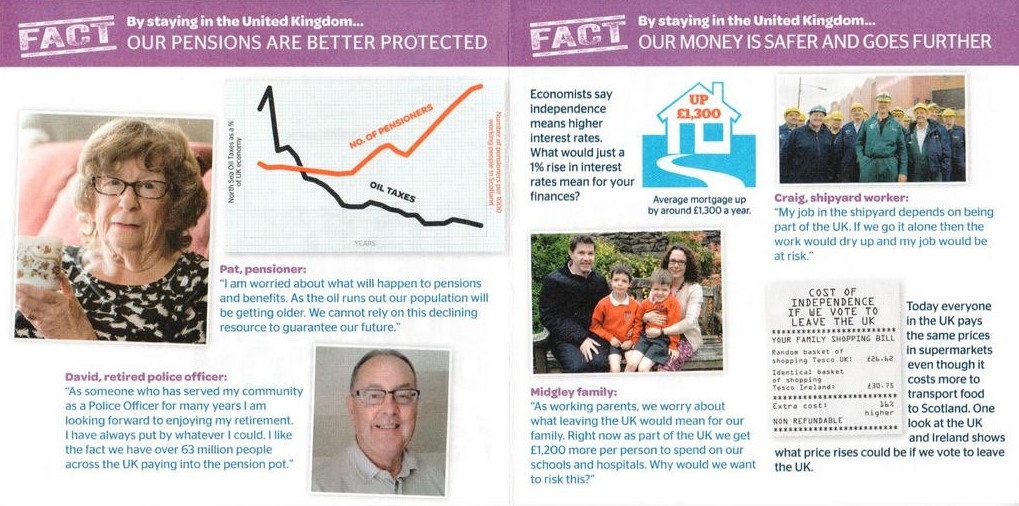
There’s something fascinating about the latest “No Thanks” leaflet that’s slithering its way through letterboxes in Scotland this week, and it’s not the empty sloganising it deploys in lieu of an argument. (“We’re better together because best of both worlds!”)

It’s this graph.
This story from earlier this month is now the third most-read in Wings history. But there was an aspect of the revelations in the Future Of England survey that we didn’t touch on, and it’s worth picking up now.
And that’s quite an interesting finding, because it means that Scottish Labour – the self-proclaimed “party of devolution” – now actually wants LESS tax-raising power for the Scottish Parliament than just about anyone else anywhere in the entire UK.
Here’s “Better Together” chief Blair McDougall in today’s Herald:
Let’s just read that through again. He’s saying that his campaign can’t use “love of our country” as a campaign weapon because people on both sides love their country. So instead he’s going to use “love of our families” as a distinguishing characteristic.
The only possible conclusion that can be drawn from those statements is that Yes supporters don’t love their families. It’s a bold gambit, we’ll give him that.

Several papers today report that “Better Together” are filing a complaint with the BBC about the audience at Monday’s debate between Alex Salmond and Alistair Darling, alleging bias in both audience composition and question selection – claiming that 10 questions favoured the Yes side to only three favouring No.

We’re not really sure how a question can favour either side, but the sour-grapes move does raise an interesting issue, which we’re going to illustrate with an example from the debate the BBC ran the following evening in Edinburgh.
(Help keep this vital news outlet broadcasting here.)
The website of the Dumfries & Galloway Conservative Party yesterday:

Perhaps they read the press coverage of the Salmond-Darling debate later on.
Wings Over Scotland is a thing that exists.