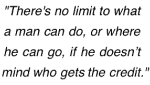
From Kezia Dugdale’s speech to the Scottish Labour conference yesterday:
So hang on – only people born in Scotland are “Scottish”? Bit controversial. But then again, given Scottish Labour’s constant pejorative use of the word “foreigner” in recent years, we probably shouldn’t be shocked.
The Scottish Daily Mail has been working itself into a froth this week over the idea that the Scottish Government doesn’t intend to match George Osborne’s increase in the upper-rate income tax threshold from £42,000 to £45,000.
Central to the complaint is that rejecting the increase will hurt what the Mail calls “the squeezed middle” and “middle earners”, including “nurses, teachers and police”.
There are, of course, several ways of defining “middle”.
We can hardly contain our joy, gentle readers, that Scottish Labour have brought this magnificent graphic from January back again, tweeting it several times yesterday with all the mindbogglingly fat-headed flaws from two months ago still present.
But we couldn’t help being struck by this new comment about it, by the branch office’s notoriously truth-averse finance spokesclown:
Let’s walk through that one really quickly. People can’t afford to save for a deposit, because rents are so high. So rather than do anything about rents, Labour will double the zero they HAVE managed to save, boosting it all the way up to, er, zero.
There are two very different kinds of welfare in the UK. One is the kind that primarily benefits poor people, which is under remorseless attack from the government.
But there’s another kind too, for which there’s still a bottomless pit of cash.
Fearghas MacFhionnlaigh on There May Be Justice: “Willie writes (5 Oct 2026 at 1:09 pm): « This one’s for Moira…Democracy is a fragile flower » —————- Brings…” Oct 5, 13:53
Terry on There May Be Justice: “Proud to be part of this – especially when I complained to the police about the donations I gave, got…” Oct 5, 13:25
Aidan on The Love Of Big Brother: “Yes “Confused” – an accurate and concise description description of the formation of Great Britain is “irrelevant pedantry”, whereas your…” Oct 5, 13:23
Ian on The Love Of Big Brother: “People in glass houses……. https://archive.ph/3OAhZ” Oct 5, 13:12
Willie on There May Be Justice: “This one’s for Moira. Yes, that struck a cord. Justice has to be served for what was done to Alex…” Oct 5, 13:09
Fearghas MacFhionnlaigh on The Love Of Big Brother: “SARA SALYERS: NO KINGDOM NO UNION (3 Oct 2026) www.youtube.com/watch?v=4l6XDoIg4uI” Oct 5, 12:30
Northcode on The Love Of Big Brother: “For clarity: Q: Is Scotland a country? A: YES Q: Is England a country? A: YES Q: Is Scotland a…” Oct 5, 11:58
Fearghas MacFhionnlaigh on The Love Of Big Brother: “Professor ROBERT BLACK KC GENEVA SPEECH (18 Sept 2025) www.youtube.com/watch?v=PGvHUWYNyGM” Oct 5, 11:42
Captain Caveman on The Love Of Big Brother: “”Orwell’s ‘authoritarianism’ is essentially colonialism” You don’t say. Probably a lot easier at this juncture if you can bloody tell…” Oct 5, 11:26
Fearghas MacFhionnlaigh on The Love Of Big Brother: “SALVO STONEHAVEN ROADSHOW (26 Sept 2026) Q&A with SARA SALYERS www.youtube.com/watch?v=yIcsq3LkcrU” Oct 5, 11:24
Confused on The Love Of Big Brother: “Desperate, put a sock in it NC. – there is a peculiar kind of mid-wit who takes pleasure in irrelevant…” Oct 5, 11:22
Alf Baird on The Love Of Big Brother: ““Just about at the door of Orwells1984” Orwell’s ‘authoritarianism’ is essentially colonialism, which is likewise ‘based on psychology’, and the…” Oct 5, 11:08
100%Yes on The Love Of Big Brother: “Its wrong but it happens all the time the cost are used as a weapon even when you’ve got a…” Oct 5, 10:25
Northcode on The Love Of Big Brother: “That was then and this is now… I’m bored with all the chuntering surrounding the “Treaty of Union” that goes…” Oct 5, 10:16
sarah on The Love Of Big Brother: “Rev, fingers well and truly crossed for the Protected Costs Order. I don’t suppose that there is any idea of…” Oct 5, 09:05
Hatey McHateface on The Love Of Big Brother: ““There seems to be utter confusion” Agreed.” Oct 5, 06:43
James Che on The Love Of Big Brother: “Lornical It is not a case of Scotlands people agreeing to the treaty of union at all, there were enough…” Oct 5, 01:06
gm on The Love Of Big Brother: “The labour party cancelled ‘buy one get one free’ a while back, for items they felt weren’t good for the…” Oct 5, 00:23
James Che on The Love Of Big Brother: “Can we presume that the not Scottish parliament politicians in Scotland would like cheaper drugs and easier access for themselves…” Oct 5, 00:02
James Che on The Love Of Big Brother: “Lorncal. Well said. Know our history, we are a Colony because we do nothing and avoid conversations on the subject…” Oct 4, 23:51
Lee on In The Eyes Of The Law: “Just attempted to donate vis a via bank app twice. Failed. Would be happy to donate by paypal. Wont be…” Oct 4, 23:51
Hatey McHateface on The Love Of Big Brother: “I would have thought the mega data centres, the ports, the huge pylons and the undersea cables pose far less…” Oct 4, 22:27
Hatey McHateface on The Love Of Big Brother: ““it has been Unionists who have acquiesced, not independistas” Naw. If anybody has acquiesced, it’s been the majority. If anybody…” Oct 4, 22:19
Lorncal on The Love Of Big Brother: “Can we be the only people who have actively acquiesced in our own cultural and historical obliteration, Alf, because that…” Oct 4, 22:03
Lorncal on The Love Of Big Brother: “Of course there is still a Treaty, Northcode, and (domestic) Acts cannot overturn or submerge primary legislation – which the…” Oct 4, 21:39
Hatey McHateface on The Love Of Big Brother: “I have long believed that the costs to the NHS of treating the diseases and conditions associated with tobacco abuse,…” Oct 4, 21:38
Insider on The Love Of Big Brother: “Alf @8.19pm Whit ??? The Burmese Imperial Police are giving the rev the runaround ? Have you told him yet…” Oct 4, 21:35
Hatey McHateface on The Love Of Big Brother: “So the Burmese Imperial Police “explains the runaround the Rev is getting”? Only in yer heid, Alf. I asked you…” Oct 4, 21:24
Southernbystander on The Love Of Big Brother: “Yes but I put ‘right’ in inverted commas for a reason – you don’t need such a right as no-one…” Oct 4, 21:11
Alf Baird on The Love Of Big Brother: “Join the dots, Hatey: ‘Imperial Police’? Explains the runaround the Rev is getting, and a few other things.” Oct 4, 20:48