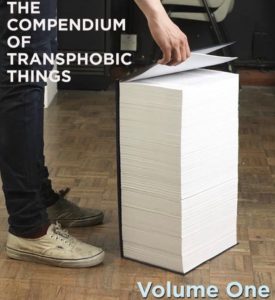
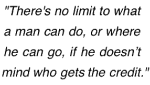
Here’s Daniel Sanderson in the Times in January this year, complaining that too few university students come from poor backgrounds and therefore the SNP are bad:
So he’d be chuffed if that situation improved, right?
In case you don’t know, Alan Roden is the former Scottish Daily Mail politics editor who’s now Scottish Labour’s director of communications. We haven’t edited this pic in any way, those genuinely are two consecutive tweets he posted yesterday.
Earlier today we reported on the mysterious failure of the Herald to notice that its front page lead story about supposedly poor ScotRail punctuality figures made a number of serious errors with regard to the facts, most notably confusing the excellent figures for last month with a 12-month rolling average which was significantly worse.
But as we read the rest of the papers, we noticed the oddest thing.
Today’s edition of The Times contains a textbook example of a phenomenon that we highlight regularly: how newspapers gradually unpick their own dishonest headlines to grudgingly admit a truth which is often the polar opposite of the initial claim.
The BBC’s Reporting Scotland is, in our view, directly responsible for at least 80% of Yes supporters’ belief that the UK’s state broadcaster is biased against independence. Almost all of the worst examples of unbalanced or downright dishonest coverage over the last five years come from the flagship teatime bulletin.
Broadly speaking, the psychological phenomenon known as the Pollyanna Principle is a tendency to neurotically see the most positive possible view of a situation. It’s not generally widely found in newspapers – for whom bad news as a rule sells much better than good news – but for some reason the Scottish press makes a uniform exception when it comes to military shipbuilding.
This, for example, is today’s Herald:
Now, in itself that headline is – unusually – true, so far as it goes. But it only takes until the first sentence of the article text before things start to fall apart.
Deep in the summer news desert, the papers today are struggling for material again. The Sunday Herald has a shock-horror front-page exposé about some photos from an Orange Lodge party that turn out to be from 2010 and 2013, while the Scottish Mail On Sunday reaches all the way back to 1940 to fill a couple of pages.
Hatey McHateface on Vibecoding A Better World: ““Why nit focus on the real enemy” The spelling and grammar police?” Nov 1, 18:24
Hatey McHateface on Vibecoding A Better World: ““highest energy prices in the world” It’s bizarre that Alf consistently posts these same lies over and over again when…” Nov 1, 18:21
Izzie on Vibecoding A Better World: “Abd we won the by election. And we are pleading in the polls Where are Alba again? If this sites…” Nov 1, 18:07
Captain Caveman on Vibecoding A Better World: “Good grief man. Your victim complex really does know no bounds. What a humourless “fud”. Bore off.” Nov 1, 17:57
Alf Baird on Vibecoding A Better World: ““if you have to explain a joke” A colonized people are invariably made the butt of colonialist jokes for colonialism…” Nov 1, 17:43
Captain Caveman on Vibecoding A Better World: “@Alf Whoosh. “Izzy Skint” was a well known Dandy comic character from the 1970s. So yeah, my background reading as…” Nov 1, 16:22
100%Yes on Vibecoding A Better World: “Your comment might have got an applause on The National but to insults us on Wings with this bull shame…” Nov 1, 16:09
Alf Baird on Vibecoding A Better World: “Plundered colonies are always “skint” and under-developed; in Scotland’s case external wealth extraction amounts to £150+ billion a year, resulting…” Nov 1, 16:09
robertkknight on Vibecoding A Better World: “I think Izzie is going door-to-door for the Scotto. More chance of winning that than of the SNP adopting a…” Nov 1, 16:03
GM on Vibecoding A Better World: “I agree with the sentiment MaryB but I am not so sure about your analysis of what is happening in…” Nov 1, 15:29
Izzie on Vibecoding A Better World: “Out leafleting today. It’s time to choose … CHOOSE SCOTLAND” Nov 1, 14:17
Hatey McHateface on Vibecoding A Better World: “An interesting read. Somebody should tell Professor Baird how the writer dismisses “international law”.” Nov 1, 14:06
Hatey McHateface on Vibecoding A Better World: “How is Scotland’s Mammie these days? It must be quite embarrassing for all those former worshippers of the ground Sturgeon…” Nov 1, 14:01
Hatey McHateface on Vibecoding A Better World: ““The students are revolting” There was me thinking the immigrants are revolting, asserting their new-found credo that just because their…” Nov 1, 13:37
Northcode on Vibecoding A Better World: “Yes, Hatey. Unlike the flawed reasoning inherent in the views of Salvo, Liberation Scotland, Alf Baird and others, your logic…” Nov 1, 12:22
sarah on Vibecoding A Better World: “The UK government still refers to the Treaty of Union as the basis of the current arrangement.” Nov 1, 11:17
Izzie on Vibecoding A Better World: “Nicola did well on BBC TV with Laura Kuenssberg. Sensible and focused. Sorely missed in Scottish politics IMHO” Nov 1, 10:57
MaryB on Vibecoding A Better World: “Sarah 31.10 The current UK government’s austerity policies have made sure that most people are too worried about job security,…” Nov 1, 10:33
Hatey McHateface on Vibecoding A Better World: “The surest route to the breakup of the UK would be for some supra-national entity to tell Scotland, England, Wales…” Nov 1, 10:29
Northcode on Vibecoding A Better World: “The “union” is a historical act, not a current constitutional relationship. The Treaty of Union (1707) was a founding event…” Nov 1, 10:03
Spartan 117 on Vibecoding A Better World: “https://waronomics.substack.com/p/the-long-war-of-the-21st-century An interesting and sobering summary of the current state of the world.” Nov 1, 09:59
Hatey McHateface on Vibecoding A Better World: “Chas, If you scroll right to the top of the page, there’s a “Contact” option on the top line. You…” Nov 1, 09:50
Chas on Vibecoding A Better World: “Stu. Mrs Chas bought me a new phone. I did not need or want one, but there you go. I…” Nov 1, 09:28
Hatey McHateface on Vibecoding A Better World: “Careful there, sarah. You’re perilously close to discovering a very unpalatable truth for yourself. You’ll be asking yourself “Do the…” Nov 1, 08:54
Hatey McHateface on Vibecoding A Better World: “Woo hoo, Alf, so now you’re free.You and your decolonised mind. Absolutely nothing holding you back, the world’s your oyster,…” Nov 1, 08:48
MrD on Vibecoding A Better World: “I did, Hatey. I asked Bing to give me a link to Gemini so I could ask it how I…” Nov 1, 08:43
Alf Baird on Vibecoding A Better World: ““the “non-existent” union” exists only in the assimilated colonized mind, Hatey, it does not exist in the decolonized mind.” Oct 31, 23:17