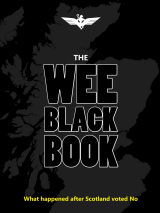
Inspired by Iain Macwhirter’s words in the Herald today, we knocked something up.

Click for full-size high-resolution image. Kids/teetotallers version below.
Read the rest of this entry →
Category
comment, pictures, scottish politics
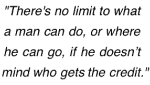
Sometimes other writers say things better and/or more concisely than we could hope to, which is great as it’s a real time-saver for us, so we might make this a regular strand. Today’s QFT is from an excellent Iain Macwhirter piece in the Herald (as, coincidentally, was the first one), which is worth reading in its entirety, but from which we especially commend the following passages (our emphasis as ever):
“But supporters of independence hope that voters will eventually come to realise that, in a sense, they have no option but to go for broke in 2014. Scots will be the laughing stock of every stand-up comedian in Britain if they bottle out of self-government.“
“Anyone who believes that the UK Government is itching to give the Scottish Parliament more economic powers than those in last year’s Scotland Act really hasn’t been keeping up. The review of Barnett that will follow the implementation of the Scotland Act will be an opportunity for the Coalition to answer the charge that Scotland has been getting more than its fair share of public funding. With the threat of independence removed, the UK will no longer feel any need to placate Scottish demands for what many English voters believe is special treatment.“
Okay, it’s not quite as snappy as “Vote No, Get Nothing”, but it does have the benefit of being actually slightly more true.
Tags: qft, vote no get nothing
Category
media, scottish politics
Against our better judgement, we found browsing the Twitter feed of the Labour MP for Glasgow South (remember him?) on Friday for the first time in several months, after some irresponsible person (specifically this one) drew our attention to the fact that Tom was still boasting proudly about the Downfall-parody video clip that got him in trouble last year. And a couple of things struck us as at least vaguely interesting.

One was the “biog” entry below the avatar, which is a variant on a well-known chant often aired by fans of defunct Glasgow football club Rangers FC – “Nobody likes us, we don’t care”. It seems an odd, confrontational attitude to adopt for someone who relies entirely on being liked by the public to still have a job.
But it was the rest of the feed that revealed the oddest thing.
Read the rest of this entry →
Tags: britnats, confused, the bain principle
Category
comment, scottish politics
We’ve been warning for a while now that the independence debate is likely to get uglier before it gets prettier this year, despite the protestations of the No camp that they want a mature and respectful discussion. The bleaker reality, however, is revealed by former Labour spin doctor Simon Pia in today’s Dundee Courier.

His column “The Long And Winding Road To 2014” isn’t online as far as we can tell, but the SNP’s Kevin Pringle kindly took a snapshot of the piece for us. You can click on the image above to read the whole thing, but one passage in particular is revealing when it comes to what we should expect in the next 18 months.
“What is particularly amusing is hearing the Nats appeal for a high-minded debate being echoed by Alistair Darling and the uber-unionists. One ploy Darling can be relied on is to bore everyone senseless over the debate while his underling big Blair McDougall and his “bettertogether” muckers get down and dirty in the gutter with Blair Jenkins and co of the Yes lot.
My money would be on Big Blair rather than wee skinny Blair for that one. But whether one likes it or not, it is in the interests of the unionsts to lower the tone.”
(Wings Over Scotland accepts no responsibility for the grammatical or literary failings of either Mr Pia or the Courier’s sub-editors, if it still has any.)
We’re inescapably reminded by Pia’s comments of an oft-quoted (and -misquoted) piece of wisdom that’s most commonly attributed to George Bernard Shaw: “I learned long ago never to wrestle with a pig. You get dirty, and besides, the pig likes it.”
Tags: the positive case for the union
Category
analysis, media, scottish politics
We must admit, we’re having some trouble getting our heads round the lead story in today’s Herald. Under the headline “Row flares as Treasury blasts SNP oil dividend”, the paper quotes Danny Alexander outlining what the Chief Secretary to the Treasury appears to believe is a devastating case against independence – namely, that if you were to calculate oil revenues over the period since devolution, Scots would each be a grand total of £1 a year worse off independent than if Scotland remained in the UK.

We suspect that while Alexander’s figures may not be inaccurate as such – within their own carefully-selected frame of reference – this is nevertheless an example of the Many Small Lies principle (aka the Swarm Of Wasps), in that there are so many absurdly gaping holes in his argument that it’s difficult to know which one to focus on. So let’s see if we can quickly pick out just a handful and give them a brief once-over.
Read the rest of this entry →
Tags: too wee too poor too stupid
Category
analysis, scottish politics, stats, uk politics
In a slightly surprising development reported late this afternoon by the Guardian, the Ministry of Defence appeared to suddenly and officially confirm what most supporters of independence have asserted for some time: that if Scotland becomes independent the rUK will lose its nuclear deterrent, as it has nowhere else to put it.

In a surprisingly direct response to a question from CND, the Ministry revealed that “the safety arrangements for Devonport [naval base near Plymouth, widely regarded as the only possible alternative berth for the submarines] do not permit the presence of submarines carrying Trident nuclear warheads”, and that “The MoD’s safety experts are not considering changing that“.
It was already known that even if the submarines themselves could be docked in Devonport, there was no possibility of replicating the Coulport weapons base without years of work costing billions of pounds, but the MoD’s unexpected revelation, as well as being an apparent reversal of the Ministry’s position of a year ago, is a dramatic intervention with radical and complex implications for the independence debate.
Read the rest of this entry →
Category
analysis, apocalypse, comment, scottish politics, uk politics
There’s an absolutely despicable article on Labour Uncut today that we’re reluctant to link to. There’s a Google Cache version here, and in case it dies we’ve reprinted the whole thing below (sue us, Labour Uncut) so you don’t need to give the site traffic.
For the most part it’s a tedious rehash of the tired old “votes for 80 million expat and diaspora Scots” routine, but it’s enlivened with some ugly, base abuse of the First Minister, or “the fat, failed economist from Hollyrood” [sic] as author and Labour member Ian Stewart refers to him. The worst part, though, comes just before the end.
“At a time when the French voters of London have their own seat in the National Assembly, when serious moves are being made to press for a similar accommodation in the Irish Republic, not to mention Sinn Feinn’s mooting of some kind of a say for the wider diaspora, what do we get? Oh yes, the chance to maybe need a passport to visit granny.
Perhaps Mr Salmond made his attitude clear to these millions when he organised the great “Homecoming 2009” a while back – when it was clear to all that if your accent was in English rather than American, you had best not bother.”
This, we feel wholly confident in asserting, is a defamatory and libellous statement. The notion that Alex Salmond ever suggested, let alone made it “clear to all”, that English people weren’t welcome at Homecoming 2009 is one utterly unsupported in fact, and a normally-respectable site like Labour Uncut should be ashamed to have printed an open and direct accusation that the First Minister is a racist.
The battle over independence will get ugly in the next 18 months. We hope the Yes side doesn’t descend to the depths of Mr Stewart, and that the aggressive provocation of the Unionists doesn’t lead to the spilling of blood in Scotland as it continues to do in Northern Ireland. If it does, forgiveness will be a long time coming.
Read the rest of this entry →
Tags: britnats, flat-out lies, smears, the positive case for the union
Category
comment, media, uk politics
Yesterday we reported the excellent news that US media giant CNN’s travel arm had named Scotland their No.1 travel destination of 2013, a move likely to generate many millions of pounds in increased tourism business for the Scottish economy. And to their credit, both the Scotsman and Herald also covered the story.
(Though neither of them apparently recalled the extensive coverage they’d given to the Holyrood opposition parties savagely attacking the Scottish Government for spending money on two trips to America to promote Scotland there in 2012.)

The Herald’s piece was so tiny and buried it attracted no reader comments (or none were approved), but the Scotsman’s more prominent article did. Why not take a moment and glance below to revel in the warmth, joy and positivity with which the publication’s Unionist readers welcomed this unequivocally happy development?
Read the rest of this entry →
Tags: britnats, too wee too poor too stupid
Category
analysis, comment, media, scottish politics
Journalists and broadcasters tend to be very prickly about allegations that they do their job in a biased way, and it’s a difficult claim to prove. Much of the time it centres around the belief that “If this story was about Party Y rather than Party X you’d be covering it in a different way”, and that’s a hard assertion to back up because it’s based on an assumption rather than an empirical, demonstrable reality – it’s rare that two parties or two politicians ever find themselves in completely comparable situations.
So we’re very grateful to the good people of the Herald this week for kindly providing us with an eye-opening illustration of what happens when they do.
Read the rest of this entry →
Category
analysis, media, scottish politics, uk politics
The travel division of American TV channel CNN this week named Scotland its No.1 tourism destination for 2013. In its announcement CNN Travel cited “international buzz, major events, savvy marketing and economics” among the reasons for its decision.

It would seem reasonable to include in that “savvy marketing” the efforts expended by the Scottish Government on a pair of major visits to the USA in 2012, when it sent delegations to the premiere of “Brave” and the Ryder Cup (which is of course coming to Scotland next year and is expected to generate over £100m).
At the same time, it might be instructive to remember the attitude of the four Holyrood opposition parties and the media to the work of those delegations.
Read the rest of this entry →
Tags: snp accused
Category
analysis, media, scottish politics
The only downside to the success of Wings Over Scotland’s first year was that the site took up so much time it had a damaging effect on our finances. (So extra-special thanks to those who contributed a few quid via the Donate page to help keep us in webhosting and 35p pasta.) Luckily, it looks as though we’ll be able to give up and get back to some proper paid writing work shortly, as there’s someone who’s decided to do our job for us far more effectively than we could ever hope to. (Link added.)
“No campaigners must publicise the fact that this is as good as it gets […] With a No win little is going to change. Right here, right now you can see the kind of country we are going to be living in. No use kidding on that there is going to be some great dramatic change.”
Thanks for that, Michael Kelly of the Scotsman. We couldn’t have put it better.
Tags: vote no get nothing
Category
analysis, media, scottish politics, uk politics
Scottish Liberal Democrat leader Willie Rennie should be commended for starting 2013 with a legitimate request rather than a party-political attack. The Herald today reports his renewed call for a public inquiry into the events of the Lockerbie disaster.

The call was prompted by the new Libyan government’s pledge to release documents relating to the incident “as soon as time, security and stability permitted”. But what will such documents reveal beyond what we already know?
Read the rest of this entry →
Tags: Morag Kerr
Category
analysis, disturbing, misc