Johann Lamont used to be an English teacher. We presume she was a conscientious and caring educator. We imagine she’s as horrified and embarrassed by this press release from the train-drivers’ union ASLEF yesterday as we are.

Read the rest of this entry →
Tags: and finally
Category
analysis, culture, disturbing
The debate about whether Scotland could survive and flourish outside the Union is uncannily similar to the one that filled the media a year ago about whether Scottish football could live without Rangers. (And which by a strange and almost inexplicable coincidence tends to feature many of the same people on the respective sides.)

As the events of the spring and summer of 2012 unfolded, even the game’s own governing body insisted that separating the rest of the SPL from the Union Jack-loving Ibrox club would reap a disastrous whirlwind of destruction, with businesses (sponsors) fleeing in terror and clubs becoming impoverished without the generous subsidy of thousands of visiting Rangers fans.
In the end, despite the most strenuous efforts of the SFA, SPL and SFL to override the wishes of their customers with a campaign of relentless and increasingly-hysterical fearmongering, the new “Rangers” was denied both entry to the SPL and a “leapfrog” into SFL 1, and joined Scottish football at the lowest professional level.
So how did post-apocalypse life turn out in the people’s game?
Read the rest of this entry →
Category
analysis, apocalypse, football, scottish politics, stats
Yesterday the Daily Record led with a front-page splash about Labour-controlled South Lanarkshire council threatening to evict a tenant over bedroom tax arrears. Today the paper carries a profuse apology from the council’s leader Eddie McAvoy insisting that the letters were sent in error, although the recipient was unconvinced:
“The council last night hand delivered a letter of apology to Angela. But she said: “I don’t believe a mistake was made in the first place and it is only because I appeared in the Record that the council have backed down.””
The Record was deeply sceptical too, issuing a sternly-worded rebuke to the council in an editorial leader column which also pointed out other unsightly goings-on in the “long-time Labour fiefdom”.
We must presume that rogue elements in Labour are at fault, then.
Read the rest of this entry →
Category
analysis, comment, disturbing, scottish politics
When supprters of Scottish independence cite the infamous McCrone Report – a UK government document suppressed by both Conservative and Labour administrations in the 1970s because of its explosive revelations about the potential wealth of an independent Scotland – Unionists have a standard tactic.
Mumbling that it’s all ancient history, water under the bridge, and things are different now, they attempt – quite understandably – to swiftly move the discussion away from the uncomfortable reality of how much trust Scots should place in the word of London governments on the subject of oil revenues.

Today’s Sunday Post carries a front-page lead story which notes that in the 40 years since the original report was hidden from the Scottish people, nothing has fundamentally changed. As almost nothing of the Post is currently available online, we’ve included a hefty extract from the article below.
Read the rest of this entry →
Tags: misinformationtoo wee too poor too stupid
Category
analysis, disturbing, media, scottish politics, uk politics
We got an email from our Prague correspondent last night, but that’s not the only thing the disgraceful pun in the headline refers to. As Michael Moore was kicked around the playground by Nicola Sturgeon in the first Scotland Tonight debate that same evening, the soggy security blanket he clung to more than anything else was the currency issue, which the No camp appears to believe is now its most powerful weapon.

It’s a two-pronged Trident, if you’ll forgive the even more tortured wordplay in that metaphor. Firstly there’s the scaremongering part containing the (empty) threat that the rUK would refuse to enter a currency union with an independent Scotland, forcing it to join the embattled Euro, and as back-up there’s the claim that if we DID get a currency union, Scotland would somehow end up getting less consideration from the Bank of England governors when it came to monetary policy than the none it gets now.
Let’s take the briefest look we can manage at both of those assertions.
Read the rest of this entry →
Tags: misinformationproject fear
Category
analysis, europe, scottish politics, uk politics
We should point out in advance that we’re using the word “voter” quite wrongly here. But a piece in today’s Daily Record has us beaten all ends up for wrongness.

The article’s headline, “Texas singer Sharleen Spiteri: I wouldn’t vote for Scottish Independence”, is entirely accurate – the 1980s pop star lives in London and won’t be voting in the referendum. Her reasoning, though, is a touch unexpected.
Read the rest of this entry →
Tags: misinformation
Category
analysis, investigation, media, scottish politics, wtf
It’s come to our attention that despite all of our hard work transcribing interviews with Unionist politicians, some of our stupider readers still – incredibly – aren’t 100% clear on certain aspects of the policy alternatives the UK parties will be offering the Scottish electorate in hope of persuading them to vote No in 2014.

One such issue is Labour’s preliminary proposal to devolve income tax entirely to the Scottish Parliament, which is backed by Johann Lamont but strongly opposed by many of the party’s Westminster MPs.
Fortunately, an interview on last night’s Scotland Tonight with former Labour leader Gordon Brown eliminated any possible remaining doubts, with the sort of direct, straight-speaking approach for which the ex-Prime Minister was justly renowned.
Read the rest of this entry →
Category
analysis, scottish politics, transcripts
When we’ve been asked on a couple of different occasions why we started Wings Over Scotland, we’ve always given the same reply – to ask (and thereby try to answer) the questions that the Scottish media was dismally failing to ask on our behalf. It would be hard to illustrate that failure with a better example than what happened yesterday.

We’re not even talking about the bog-standard factory-default Unionist bias that’s seen not a single newspaper today depicting the launch of “United With Labour” as a “split” in the anti-independence movement – after a year of leaping on every single policy difference or minor spat between members of the Yes campaign as evidence of “chaos” and “turmoil” – despite the news/comedy value of an organisation devoted to “unity” and “togetherness” breaking into splinter groups just months into its existence.
We refer to something much more fundamental – basic journalistic competence.
Read the rest of this entry →
Category
analysis, comment, media, scottish politics
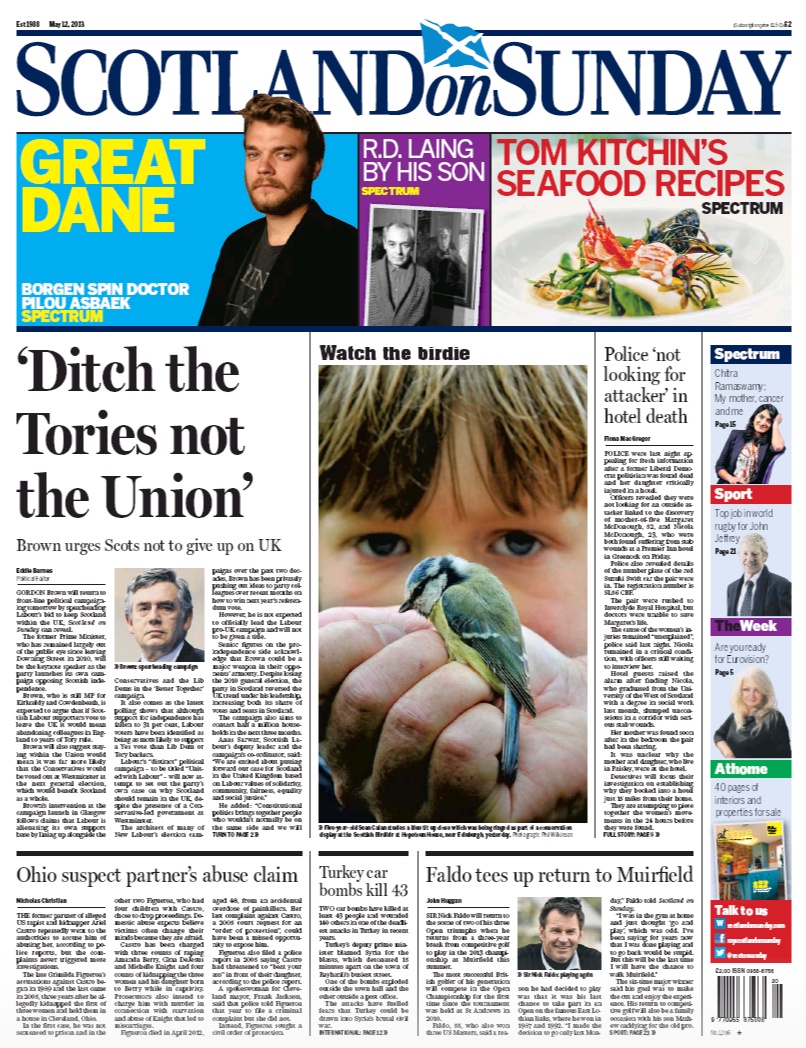
The Scottish media is full today of Gordon Brown’s latest attempted intervention in the independence debate. Scotland on Sunday and the Sunday Herald both report that the former Prime Minister will urge Scots to “ditch the Tories, not the Union” (as the original SoS headline put it before being changed online to the rather more sober “Brown urges Scots not to give up on UK”, presumably out of respect for the gentle sensibilities of the paper’s Conservative-leaning readership).
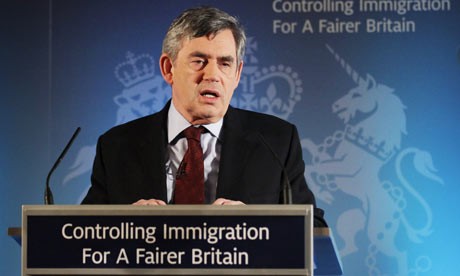
(We’d like to take a brief moment here to appreciate a couple of beautifully acidic, deadpan lines from the Herald’s piece, written by Paul Hutcheon. Our emphasis.)
“Brown, who led his party to defeat at the last General Election, will be the special guest at an event in Glasgow. Although Labour has a dominant role in the cross-party Better Together campaign, senior party sources last year pushed for a separation to convey Labour’s distinctive message.”
The substance of Brown’s argument, in so far as it can be said to have any, is founded on a lie that was comprehensively disproved on this very website well over a year ago – namely that “if Scottish Labour supporters vote to leave the UK it would mean abandoning colleagues in England to years of Tory rule”.
That proposition is demonstrably untrue (not to mention a remarkably defeatist assertion that Labour can’t now defeat the Tories in England, despite having done so in 1997, 2001 and 2005). But even if it wasn’t, what then?
Read the rest of this entry →
Tags: lizardsone nationvote no get nothing
Category
analysis, scottish politics, uk politics
If there’s one area where you really have to hand it to “Better Together”, it’s sheer shamelessness. Despite having been humiliatingly exposed for inflating attendance figures at their events by at least 100% twice on this site alone, to the great merriment of Yes campaigners, they just keep right on going without a hint of embarrassment.

We can’t help starting to wonder if this might all be one of those sort of “When I was going to St Ives…” trick riddle things. How many Darling Youth kids make 70?
Read the rest of this entry →
Tags: arithmetic failflat-out liesmisinformation
Category
analysis, pictures
Yesterday we were reading an engrossing article by Peter Kellner, the president of YouGov. It’s only available in PDF form as far as we can tell, and in terms of formatting it’s a bit of a trial to get through, but the information within is fascinating.
It’s a study of the difficulties faced by Labour in their attempt to win the 2015 election, and without wanting to spoil it for you, Kellner’s conclusion is that it’s going to be extremely difficult. That won’t be news to Wings Over Scotland readers, of course, but the depth of detail is well worth getting into if you’ve a head for that sort of thing.
We gleaned something different from the piece, though.
Read the rest of this entry →
Tags: Kinnock Factorlizardsone nation
Category
analysis, comment, disturbing, idiots, uk politics
We’re a little suspicious of yesterday’s Ipsos MORI poll on Scottish politics.
It’s not so much the numbers for independence, which are within normal fluctuations and error margins and may also reflect a recent tsunami of doom-laden, irrational and hyperbolic media coverage on the currency issue. No, what’s got us in sceptical mood are the frankly ridiculous Holyrood voting intentions figures, which appear to suggest a shift towards Labour of about 16 points in the space of two months during which the party did nothing but make a laughing-stock of itself.

Frankly, if we could find even a single Labour supporter who thought Johann Lamont was actually going to be Scotland’s next First Minister we’d be astonished, so we’re putting the poll down as a rogue until it’s corroborated by another one. But there was something even stranger about it.
Read the rest of this entry →
Category
analysis, scottish politics, stats