We’ve raised this subject before, but it was brought to mind again by a conversation we had on Twitter last night and this morning, and it never gets any less relevant. Opinion polls are tricky things. Let’s just remind ourselves of a few:
Who do you trust to act in Scotland’s best interests?
Scottish Government: 71%
UK Government: 18%
(Source: here. Also reported in Scotsman subsidiary Fife Today, but mysteriously now completely vanished from the internet.)
Which decisions about Scotland should be made by Holyrood?
All of them: 43%
The same ones as now: 21%
(Source: here, table A1. A “devo-max” option scored 29%.)
Should Scotland be an independent country?
Yes: 28%
No: 48%
(Source: here, although see here.)
Alert readers will of course have noticed (again) that these three questions are in fact all the same as each other. They all describe independence. Yet the answers are radically different. Scottish voters trust the Scottish Parliament to act in their best interests vastly more than they trust the UK Parliament. They think it should make all decisions about the governance of Scotland. Yet ask them if they want to vote to make that exact thing happen, and they change their minds completely.
There’s clearly a serious democratic disconnect here. What to do?
Read the rest of this entry →
Category
analysis, psephology, scottish politics
For four days, anyway.

Don’t be mean about the swede. They’re trying, bless ’em.
Read the rest of this entry →
Tags: the positive case for the union
Category
pictures
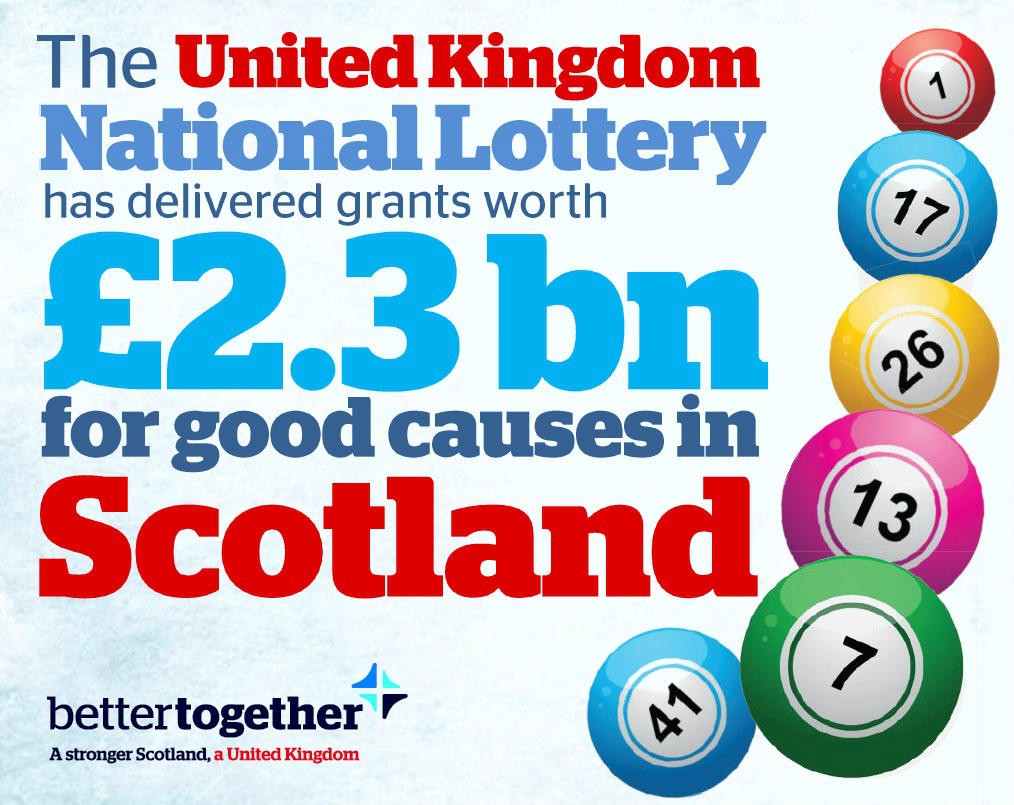
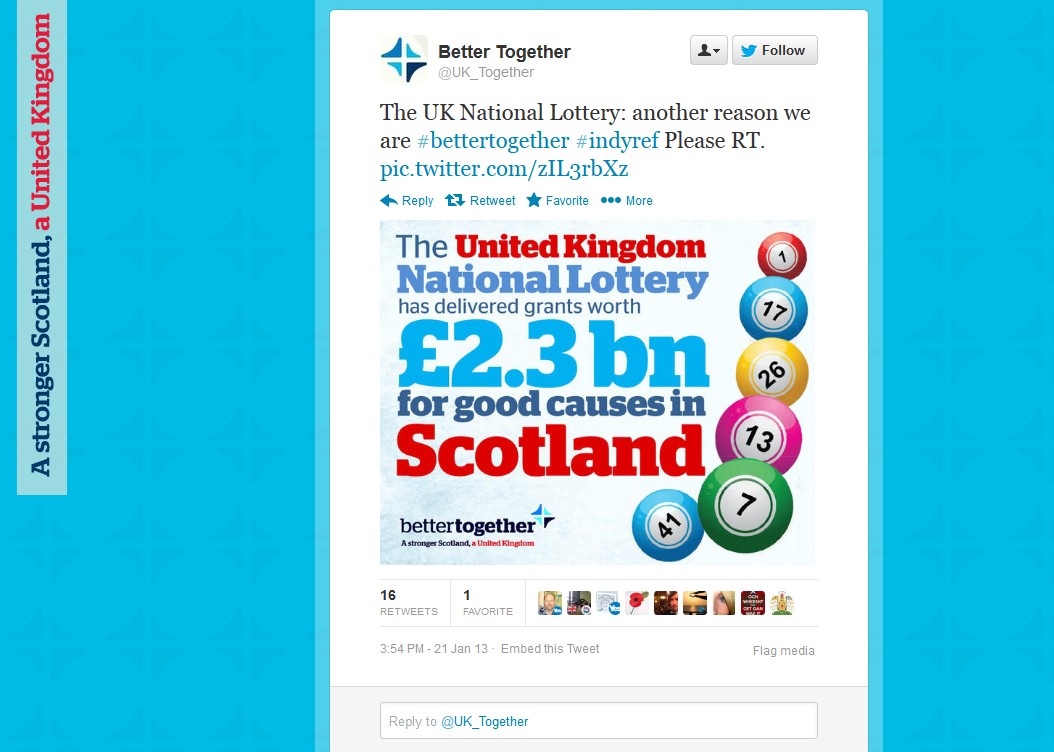
(We suspect this might become a regular series.) We try not to take any notice of the often-ludicrous propaganda churned out by the official “Better Together” campaign, but today’s was too utterly ridiculous to ignore. We’re not going to deface our nice pages with the image, though you can see it here if you want to without giving them any hits.

The graphic claimed, mind-bogglingly, that the award of £2.3bn in grants to good causes in Scotland by the National Lottery since its advent in 1993 was “another reason we are better together”, as if the figure represented some great largesse towards Scotland on the part of the UK. This, as any reader with an IQ higher than the number on a lottery ball will immediately realise, is such a monumental and obvious misrepresentation of how the lottery works that we can only concur with the Twitter user who enquired “When will the glue-sniffing stop at BT strategy HQ?”
Read the rest of this entry →
Tags: arithmetic fail, brassneck, confused
Category
analysis, games, idiots, uk politics
There was an interesting article in today’s Herald entitled “SNP snub plan for more tax powers at Holyrood”. It centred around the latest report from the Institute of Public Policy Research, advocating a new form of further devolution settlement (dubbed “Devo More”) as a solution to Scotland’s problems rather than for independence.
The article itself was devoid of any analysis of the report’s findings, though in fairness to the Herald it did note that the IPPR “has close ties to Labour”, thereby alerting suspicious readers to potential bias within the document.

As far as many independence supporters are concerned, any offer of further devolution at this point is merely an empty promise of “jam tomorrow”. Had any Westminster party seriously intended to increase the level of devolution to Scotland, runs their argument, then they could have done so during the Calman Commission, the Scotland Act or more recently by including an offer of further devolution on the ballot paper for the 2014 independence referendum. They did none of these things.
Read the rest of this entry →
Tags: Federalists Unionists and Devolutionists, Scott Minto, vote no get nothing
Category
analysis, disturbing, uk politics
One of the most unfortunate things about the Scottish media’s coverage of the independence debate is the persistent portrayal of the Yes campaign as nothing more than a figleaf concealing the SNP. Recently we’ve pointed out the unwillingness of the press to acknowledge information that’s already in clear public view with regard to the demographic make-up of the pro-independence movement, even while making great play of the alleged comparative broadness of the No side.

So we decided to conduct our own poll, just out of curiosity, on a dozen random topics. With just shy of 1000 respondents it’s a respectable sample size, and while of course it isn’t scientific (being self-selecting) it wasn’t aiming to be. The large majority of this site’s readership is of the nationalist persuasion – for want of a better term, at least – so we weren’t trying to take a snapshot of all Scotland, but rather one specifically of the Yes movement. The results were pretty interesting.
Read the rest of this entry →
Category
analysis, scottish politics, stats
Alert readers might have noticed that this morning we tweeted a link to a post on the Facebook page of Labour For Independence. It was a retort to a sneering claim from Anas Sarwar that the group had “one or a maximum of two Labour members” and was in fact a front for the SNP, and it responded by printing a list of 13 named Labour Party members who were active in the group. One of them stood out a little.

Now, we have absolutely no idea if that Alex Foulkes is the same Alex Foulkes who’s the son of arch-Unionist peer and Nat-basher Lord George Foulkes. We’re sure there are lots of people called Alex Foulkes in the Scottish Labour Party. But given that Lady Judy Steel (the excellent wife of Sir David, another prominent No voice) came out for independence a while ago – prompting a slightly misjudged joke from Murdo Fraser last week – it’d be a moderately amusing development if it was.
After all, if the leading lights of the No campaign can’t even convince the closest members of their own family to back the UK, how the heavens are they going to be able to sell the ailing Union to the rest of Scotland?
Tags: light-hearted banter
Category
comment, misc
We’ve already highlighted the absurdity of the comments made by several Unionist politicians last week (in both the Commons and the Lords) about the Scottish Parliament being “undemocratic” and a “one-man dictatorship”. But we only mentioned Scottish representation in doing so. What about the whole UK?

The majority – 53% – of votes cast by the British electorate in 2010 were worthless, because they were cast for candidates who didn’t win the seat they contested and are therefore simply thrown in the bin by the “first past the post” electoral system. Thousands of people were locked out of polling stations across the country on the evening of the vote, but it didn’t really matter, because statistically speaking their vote would probably have been completely ignored anyway.
Read the rest of this entry →
Tags: hypocrisy
Category
analysis, stats, uk politics
Bless ’em, they’re getting closer. After some nagging, the Herald has now finally changed the story about jobs at Faslane that it printed a correction for earlier this week. And credit to them, the new version is a good 5% less wrong than the original.

Rather more distressingly, though, the newly-edited story still doesn’t match up even to the Herald’s own correction, never mind any kind of reality.
Read the rest of this entry →
Category
analysis, comment, media, scottish politics
We hope you’re just drunk, Ian. Honestly we do.

Read the rest of this entry →
Tags: britnats
Category
comment, idiots, stupidity
We’re indebted to commenter “DougtheDug” on A Sair Fecht for spotting this one. On Tuesday in the House of Commons section 30 debate, Labour MP Ian Davidson bitterly attacked the Scottish Government for allegedly timing the independence referendum to coincide – at least to within six months – with the 700th anniversary of the Battle Of Bannockburn. (Ignoring the fact that the referendum would have happened years ago had it not been vigorously opposed and blocked by Labour.)
Davidson claimed that the timing amounted to “celebrating the murder of hundreds or thousands of English people“, and accused the SNP of exploiting anti-English sentiment for “partisan advantage”. It was a contemptible enough piece of dog-whistle politics in its own right, but all the more extraordinarily hypocritical in the light of this:

Lurking in the Westminster archives is an Early Day Motion from late 2003, in which Mr Davidson was happy to attach his name to a Parliamentary celebration – tabled by the Conservative MP for Romford, Andrew Rosindell – of what we presume we must call “the murder of hundreds or thousands of French and Spanish people”.
We must admit, we’re a little confused. Apparently openly and explicitly rejoicing at the historic deaths of enemy troops is fine if you’re a British nationalist, but disgusting, racist political chicanery if you’re a Scottish one (even when you’re not actually doing it). Can anyone point us at the rulebook for this sort of thing?
Tags: britnats, hypocrisy
Category
analysis, comment, uk politics
Perhaps we’re being overly suspicious here. But the “sex scandal” incident currently surrounding Glasgow City Council leader Gordon Matheson actually happened over a month ago – December 12th to be precise. Having evaded the attention of the press for so long, there’s no obvious reason for the story to have suddenly broken now.

Except, that is, if there was another story centred on Glasgow City Council – a much more serious one, that the Labour council wanted to deflect attention from with a juicy bit of sleaze gossip. And hey, guess what?
Read the rest of this entry →
Category
analysis, comment, media
At the time we write this, the Herald’s inaccurate story about Faslane jobs remains uncorrected. But as we were scouring the page last night for any sign of the Herald’s “clarification” of its figures, we stumbled across a gem in the comments.

As long-term readers will probably be aware, Terry Kelly isn’t just some random comments-page troll. He is in fact an elected Labour councillor for the lucky people of Paisley North West, though such is the volume of his daily outpourings in various newspapers (he’s one of the few people the Herald appears to see fit to bless with automatic comment approval) that it’s a wonder he finds any time to represent them.
Terry’s we-wish-it-was-unique blend of arrogance, smugness and complete ignorance is pretty standard No-campaign troll fodder, but the example above is particularly fine.
Read the rest of this entry →
Category
comment, media, uk politics