The thinktank Reform Scotland is no mouthpiece for the Yes campaign. Wikipedia notes that it’s “a sister organisation to the London-based right-wing, free market think tank Reform”, and in fact it’s closely involved with the forgotten “Devo Plus” campaign group created by politicians from the Unionist parties. Devo Plus itself is endorsed by “Better Together”, to the extent that BT celebrated DP’s birthday last year.

So we were pretty interested when Reform Scotland board member Professor Sir Donald Mackay appeared in today’s Sunday Times rubbishing the UK government’s pessimistic projections for an independent Scotland’s oil revenues, and suggesting that in fact a more realistic figure was more than TWICE the one being claimed by the Office for Budget Responsibility.
Read the rest of this entry →
Category
analysis, comment, media, scottish politics
The two arguments heard most often from voters who are leaning towards No (that is, discounting the diehard BritNats who’d vote for the Union no matter what) are “we need more facts” and “we’d like Scotland to be independent but there wouldn’t be the money to pay for it and we don’t want to have higher taxes”.

The first of those is a red herring, successfully propagated by the No campaign with the willing assistance of the media in order to create doubt and fear. There are, by definition, no such things as “facts” about the future. Nobody knows what’s going to happen tomorrow, regardless of whether Scotland votes Yes or No.
The next Westminster election, for example, could easily see the UK vote to leave the European Union by 2017, a change which would beyond question be far more dramatic and disastrous than any plausible outcome of Scottish independence.
The second argument, though, we can do something about.
Read the rest of this entry →
Tags: misinformation
Category
analysis, scottish politics, stats
Later this morning the Queen will launch a vessel named after herself at the Rosyth naval dockyards. Earlier, the First Sea Lord, Admiral Sir George Zambellas, appeared on the BBC News channel dripping in gold braid and medals to revel in the delivery of his shiny new toy, or at least the hull of it.
(Rather crassly Sir George claimed that it was being given the name of not just the current monarch but “both our Queen Elizabeths”, even though Scotland has only ever had one Queen Elizabeth and the ship itself tactfully avoids adding a “II” on the end.)
In what was an all-round virtuoso display of foot-shooting, the esteemed Admiral was also keen to point out just how few jobs would be supported by HMS Big Grey Floating Car Park – which won’t actually carry any fighter jets until 2020 – noting that “this ship only has 600 people aboard… that is a fraction of previous vessels of this size”.
And that got us to thinking.
Read the rest of this entry →
Category
analysis, scottish politics, stats, uk politics, video
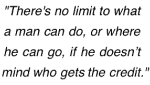
There’s a strange phenomenon at the heart of Scottish politics, and it runs far deeper than the independence referendum. It’s summed up pretty well in this image.

The picture and the comment alongside come from the Facebook page of Labour’s newest Parliamentary candidate, Kathy Wiles. They were made more than two months ago, so you’d imagine that any selection committee worth even a quarter of a damn would have checked her out enough to have a look at her social-media accounts and see if she might have said – or be likely to say in future – anything stupid.
But the thing is, we’re sure they did. Because as far as Scottish Labour as concerned, calling “most” of the voters of the most popular party in the country a bunch of workshy scroungers only interested in claiming benefits isn’t even a gaffe. It’s pretty much the official policy position.
Read the rest of this entry →
Category
analysis, comment, idiots, scottish politics
One of the features of the independence debate as covered by the Scottish and UK media has been the casual lie. We’re not talking about screaming banner front-page headlines here, but the passing, offhand untruths slipped into articles that are primarily about something else, or tiny little corner-of-a-page pieces so trivial that readers absorb the falsehood in seconds and move on.

We covered a good example of the latter last week, and it’s repeated in this morning’s Times, in a piece which makes the flatly and diametrically untrue assertion that “experts” have “produced figures suggesting that the final cost [of setting up an independent Scotland] could be £1.5 billion”, when the reality is that the only expert who has produced figures has explicitly rubbished that number.
But it’s another article in the same paper that made us smile wryly.
Read the rest of this entry →
Tags: misinformation
Category
analysis, media, scottish politics, uk politics
It seems somehow fitting that there was a political battle in Stirling yesterday. The city was host to two sets of military-themed festivities, with the UK government having decided to hold Armed Forces Day there in a move transparently aimed at wrecking the commemorations of the 700th anniversary of the Battle Of Bannockburn.
The anniversary was obviously on an immovable date and location, but the Labour-Tory coalition that runs Stirling Council, and which last year attempted to replace a Saltire which flies over the statues of William Wallace and Robert the Bruce with a Union Jack – a plan it abandoned after it was highlighted by this site – agreed to host the competing festival on the same weekend.

Armed Forces Day had free admission to undermine the relatively pricey Bannockburn event. Labour even went so far as to actively try to put people off attending the latter, with Glasgow MP Ian Davidson suggesting that the commemoration was nothing more than a glorification of “the murder of hundreds of thousands of English people”. (These particular “people” being an invading army, actual English casualties around 10,000.)
The press covered the subsequent downsizing of the historical recreation with glee, with numerous articles reporting low ticket sales and other problems right up to the eve of the show, which appeared about to be a major flop.
But then something odd happened.
Read the rest of this entry →
Tags: misinformation
Category
analysis, media, pictures, scottish politics, stats, uk politics
Last week the Press & Journal carried a story about a debate held at the Aberdeen Exhibition & Conference Centre, attended by just over 150 company directors, senior managers and other “business leaders”. The debate was between John Swinney and Danny Alexander (with contributions from Professor David Bell and businesswoman Christine O’Neill), followed by a poll carried out among the audience.

The No-friendly headline figures – which will come of no surprise to anyone who has ever read the Press & Journal – said 68% of the audience would be voting No at the end of the debate, with 16% Yes and 15% still unsure (1 person said they wouldn’t be voting. Maybe they walked into the wrong room at the start or something.)
That sounds like a pretty comprehensive win for No, so we should probably all just pack up our stuff and concede defeat.
Read the rest of this entry →
Category
analysis, media, scottish politics, stats
Professor Patrick Dunleavy of the London School of Economics, a man with absolutely no dog in the Scottish independence fight, has now published his detailed assessment of the set-up costs of an independent Scotland.
He puts the actual additional cost – that is, what Scotland would have to spend that it wouldn’t have to spend anyway if it stayed in the UK – at around £200m. That’s the total, not every year, and is somewhat below the UK government’s own “estimate” of £2.7bn, issued just three weeks ago to widespread derision.
For comparison purposes that’s very roughly what Scotland spends on the upkeep of Trident nuclear submarines every year (our share of the £2.24bn annual cost), but as the Unionist parties constantly complain that Scotland’s savings on Trident get spent several times over by Yes supporters, we thought we’d come up with an alternative.
Read the rest of this entry →
Category
analysis, scottish politics, stats
We suppose, then, that we’d better deal with the UK government’s bizarre propaganda booklet that’s about to slither through every letterbox in Scotland at taxpayers’ expense whether they like it or not. We’ve been having some fun with the cover image in the last couple of days, but astonishingly enough this is the real version:

To be honest, readers, we’re still kind of rubbing our eyes in disbelief at that one. But the McTrapp Family above (who are these implausibly happy children? Where, who or what are they running from? Are they trespassing? Where are their parents?) aren’t even nearly the weirdest thing about the pamphlet.
Read the rest of this entry →
Tags: flat-out liesmisinformation
Category
analysis, reference, scottish politics, stats
In the course of debunking some No-camp myths about “high taxes” and the cost of living in Scandinavian countries, we’ve often mentioned that in addition to average real incomes being far higher in places like Norway and Denmark (even after adjusting for the cost of living), that average is itself misleading, because the poor distribution of wealth in the UK means that it’s artificially inflated by the incomes of the super-rich.

Now it’s possible to actually put figures on that.
Read the rest of this entry →
Category
analysis, scottish politics, stats