The devil, they say, is in the detail, and that certainly seems to apply to the UK Government’s first paper on the consequences of Scottish independence. With remarkably little fanfare, the coalition appears to have dropped an atomic bomb into the heart of the constitutional debate, and not even realised it.

The core premise of the document appears to be the counter-intuitive idea that the UK can have it both ways – it can insist that an independent Scotland would be a brand-new nation with no rights to any of the shared property of the UK, but that it would somehow simultaneously be responsible for its full share of the UK’s liabilities. Michael Moore is quoted saying precisely that in today’s Herald.
The justification for this outwardly-absurd claim rests on an astonishing assertion lurking unassumingly in a series of paragraphs in the middle of the paper. We’ve copied it below and highlighted a couple of the relevant phrases.
Read the rest of this entry →
Category
analysis, apocalypse, history, scottish politics, uk politics
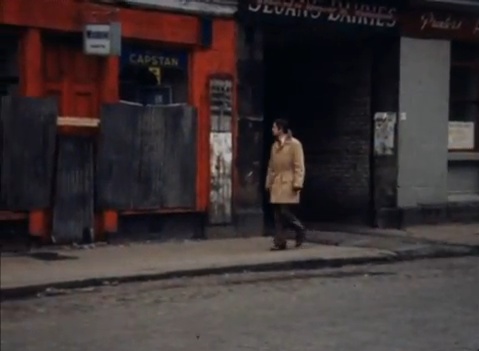
This splendid BBC news piece from 1975 about the Glasgow Underground appears to have been shot in some sort of awful, nightmarish post-apocalyptic wasteland. Or, put another way, a large and once-prosperous city run by Scottish Labour for 50 years.

Read the rest of this entry →
Category
history, media, pictures
This last week has seen the publication of a report that saw the NHS in Scotland deliver its “best performance ever”. The NHS Scotland Chief Executive’s Annual Report 2010/11 was full of praise for the organisation and the efforts it has made to improve safety, service and value in times of dwindling budgets.
“Few issues are as important to us as our health and the quality of the health services we receive. When we come into contact with the health service, we want to know that we are receiving the best possible care – care that is compassionate and safe, delivered by the most competent practitioners and planned with us at the very heart of the decisions about our care. We want to have confidence in the quality and effectiveness of any treatment.
“Some of the most significant improvements in quality include the achievement of the shortest ever waiting times for outpatient and inpatient appointments, including progress towards achieving a maximum wait of 18 weeks between referral and treatment, significant reductions in Healthcare Associated Infection to the lowest levels ever recorded and other measurable improvements in safety in hospitals.
There have been impressive increases in the numbers of people accessing smoking cessation and alcohol brief intervention services, increases in the proportion of older people being supported to stay at home through improvements in services for those with long term conditions, and reductions in the need for people to stay overnight in hospital for treatment or procedures.”
The findings were reported in the national news in a generally positive manner, such as this BBC article published on the 24th of November, detailing the efforts of the management and staff in Scotland and the results they’d managed to achieve.
Read the rest of this entry →
Tags: Scott Minto
Category
comment, history, scottish politics, uk politics
We don’t know if there’s ever been an official competition for “Most British Place In Scotland”, but if there was it’s a pretty safe bet that Ibrox Stadium would win it at a canter. So we don’t suppose we ought to be surprised that this is what happened there just before the kick-off of yesterday’s SFL3 match against Peterhead:

The display was only one part of a touching and solemn commemoration of the fallen of two world wars which also included the firing of an artillery gun on the pitch (“Hey, survivors of enemy barrages, here’s a fun trip down memory lane for you!”), Broxi Bear standing with his big comedy foam head bowed in the centre circle for the minute’s silence and – we promise we’re not making any of this up – a bunch of Royal Marines abseiling down from the Govan Stand roof with the match ball.
Now, we’re sure this whole grotesque circus was conducted with the best of intentions. But anyone juxtaposing the poppy with a national flag – with any national flag – has misunderstood what it is that the poppy is supposed to stand for in the most complete and catastrophic way imaginable. This was the poppy as symbol not of remembrance and sacrifice and tragedy, but of victory.
Read the rest of this entry →
Category
comment, history, stupidity, uk politics
As with any long campaign, we’re a bit worried that we might have to spend the next two years saying the same things over and over again, because the main Unionist tactic seems to be to keep asking questions after they’ve been answered a hundred times. That said, when you’ve got your hands full with domestic mini-crises (as we’ve had all this week), it can be quite useful to have already covered the day’s main topics and be able to just point people at the archives before rushing off to fight the latest fire.
If we don’t have a heart attack before then, see you tomorrow.
.
Sources: [1], [2] and [3].
Category
analysis, audio, comment, history, scottish politics, uk politics
A reader comment earlier today sent us off to do a little research. Specifically, we were interested in the results of opinion polling before the last referendum concerning the Scottish constitution – the 1997 vote on devolution. The results were fascinating.
In the days leading up to the referendum, two polls with standard sample sizes were conducted by System 3 for the Herald. They showed very similar results, averaging 61% of respondents in favour of a Scottish Parliament (with 23% opposed and 16% don’t-knows), and 46% in favour of that Parliament having tax-raising powers (31% against, 23% don’t-knows).
The second poll was conducted the day before the referendum. The actual vote, just 24 hours later, was 74-26 for the Parliament and 64-36 for tax-raising powers – overnight swings of 7% and 9% respectively in favour of the two propositions.
(Of the 16% of Don’t Knows on the first question, when it came to the crunch 13% had plumped for Yes compared to just 3% for No. On the tax-raising question, meanwhile, the 23% previously answering as Don’t Knows had divided 17% for Yes, 6% for No.)
This site welcomes both the continued determination of the Unionist parties to bully the Scottish electorate into making a stark choice between hope and fear once again, and also their complacency about the outcome.
Category
analysis, history, psephology, scottish politics, stats, uk politics
We’re delighted to welcome another new voice to Wings Over Scotland, this time in the shape of Peter Thomson of the Tarff Advertiser.
The most fundamental concept of Scottish constitutional practice is the right of the people of Scotland to remove their sovereign. It is a right which has been exercised on at least two famous historical occasions: the forced abdication of Mary, Queen of Scots, which brought about her flight to England, and the removal of James VII from the Scottish crown, based on evidence of James’ attempts to usurp the Scottish people’s sovereign power to the crown alone, in line with his belief that he was king by God’s will and right.
Read the rest of this entry →
Tags: Peter Thomson
Category
comment, history, reference, scottish politics
The referendum on Scottish independence has raised more than a question on what the future constitution of the United Kingdom and Scotland will look like – it’s raised an issue of who should have the ability to decide. This is a far more fundamental point, and the core principle of democracy that we hold dear is dependent on the outcome.

In 2014 Scotland will decide to maintain the UK or to dissolve it. The possibilities that stem from the decision will shape our future, but a battle is currently raging between power and democracy for control of that choice.
Democracy depends fundamentally on the minority accepting the wishes of the majority, but first requires that it be established what it’s a majority of. Numerous commentators have raised the objection that since a vote for independence would affect the entire UK, then residents of England, Wales and Northern Ireland should also be entitled to vote. Others have raised the issue of whether Scots not currently resident in Scotland should be part of the franchise.
To find out who should properly decide the outcome of the referendum, we need to look at the agreements whose continued existence is at stake, ie the Treaty and Acts of Union themselves.
Read the rest of this entry →
Tags: Scott Minto
Category
comment, history
We’re probably all sick of the “Skintland” furore already. The sneering, condescending front cover of the Economist (coupled with a truly dreadful Photoshopped image of Alex Salmond inside which was oddly reminiscent of one on a campaign leaflet the Lib Dems had to apologise for and withdraw last year) achieved its aim of provocation, while the feature it purportedly advertised was an altogether more innoffensive beast, cobbling together some fairly bog-standard Unionist innuendo, supposition and misrepresentation amounting to nothing much that we haven’t heard a hundred times before, and which was excellently dismantled by Gerry Hassan.
The most interesting thing about the article was that it started with a preamble about the Darien Scheme, a 17th-century business venture which went horribly wrong and which anti-independence activists are very fond of bringing up as a stick to beat Scottish nationalists. This very week, for example, saw the publication (given much prominence by the Unionist media) of a report by Professor Malcolm Chalmers on the future of Scottish defence, in which the learned academic also felt it bafflingly necessary to cite the three-centuries-old events of the Darien adventure.
The Chalmers report was noteworthy not just for its politically-motivated conclusions, but also the emotive language and narrative of British nationalism running through it. We’ll deal with the report itself in more detail soon, but for this weekend’s in-depth feature we’re going to look at the theme of BritNat mythology, and in particular the re-writing of the story of the Darien Scheme to that end. Trust me, it’ll be fun.
Read the rest of this entry →
Tags: Scott Mintotoo wee too poor too stupid
Category
analysis, comment, history, scottish politics, uk politics