The Sunday Herald, which enjoyed a major sales boost from being the first Scottish newspaper to officially back independence but has since seen its circulation increase partly eroded, has this morning chosen to throw a stick of dynamite onto the fire.

The paper’s front page today teases a double-page spread inside with the headline “SPECIAL REPORT: HOW INDEPENDENCE SUPPORTERS SHOULD USE THEIR SECOND VOTE”. And then things get a little strange.
Read the rest of this entry →
Tags: misinformation
Category
analysis, debunks, investigation, media, scottish politics
Last weekend’s edition of the Sunday Times gave an article to a Green activist and party worker – not billed as such, even though until last month he was on the party’s regional candidate list for Lothian – to predict that the Greens would get 10 seats at next month’s election.
Much campaigning by the various fringe parties for the Holyrood contest has been based on “seat predictors” like the one deployed to produce the figures in the piece, purporting to show that a tactical-voting strategy on the list can deliver a large gain in numbers of pro-independence MSPs compared to using both votes for the SNP.

We’ve examined that argument in considerable depth already, both theoretical and practical. But its also worth noting that so-called “seat predictors” are a rather shaky basis for making such bold forecasts.
Let’s illustrate that assertion.
Read the rest of this entry →
Tags: misinformation
Category
analysis, debunks, investigation, psephology, scottish politics, stats
Poor old Daily Record.

What a distance to fall.
Read the rest of this entry →
Tags: ticktock
Category
analysis, media, scottish politics, wtf
When we ran this story on Monday, some of the press got rather upset with us. Even though we’d linked to the full data tables published on the ComRes site, Scottish Daily Mail political editor Alan Roden, for example, huffily tweeted a link to a cropped table suggesting that the real sample size was higher.

And as it turned out, it was.
Read the rest of this entry →
Tags: misinformation
Category
analysis, media, scottish politics, stats
We’re very confused today.

Okay, so that’s all straightforward enough. The SNP are bad because they’re going to hit “middle Scotland” with more tax. Bunch of dangerous tax-and-spend lefties. Right?
Read the rest of this entry →
Category
analysis, comment, media, scottish politics
Barring some sort of unforseeable apocalypse, Scottish Labour aren’t going to win the Holyrood election in May, so it doesn’t really matter what their policy proposals are – they’re never going to happen.
Nevertheless, it’s pretty much our job to examine stuff like their plan to “scrap council tax”, and it’s more fun than watching the news today, so let’s give it a go.
Read the rest of this entry →
Category
analysis, scottish politics
Even by the low, low normal arithmetical standards of the Scottish media, yesterday’s Scottish Sunday Express humiliated itself with the most stupendously factually wrong articles we’ve seen in a newspaper for some time.

James Kelly on Scot Goes Pop! has already eviscerated its comically inept bumbling in detail, but we thought we’d just quickly give you a visual version.
Read the rest of this entry →
Tags: arithmetic failflat-out liesmisinformation
Category
analysis, comment, debunks, idiots, media, scottish politics, stats, wtf
The Scottish Daily Mail has been working itself into a froth this week over the idea that the Scottish Government doesn’t intend to match George Osborne’s increase in the upper-rate income tax threshold from £42,000 to £45,000.

Central to the complaint is that rejecting the increase will hurt what the Mail calls “the squeezed middle” and “middle earners”, including “nurses, teachers and police”.
There are, of course, several ways of defining “middle”.
Read the rest of this entry →
Tags: misinformation
Category
analysis, scottish politics, stats
There are two very different kinds of welfare in the UK. One is the kind that primarily benefits poor people, which is under remorseless attack from the government.

But there’s another kind too, for which there’s still a bottomless pit of cash.
Read the rest of this entry →
Category
analysis, uk politics
[EDIT 24 August 2016: This article has now been updated here.]
It’s Sunday, so there is of course one last convulsive orgy of “BLACK HOLE!” articles in all the papers, as every Unionist hack and pundit in the land falls over themselves to portray their own country as a useless scrounging subsidy junkie without actually using the exact words “too wee, too poor, too stupid”.
Everywhere you look there’s a “Proud Scot” screaming about how Scottish revenue this year being 1% lower than it was last year has comprehensively demolished a case for independence that those same people have spent most of the last four years stridently insisting never existed in the first place.

So before everyone moves on to a new “SCOTLAND BAD” next week, we thought it was worth a short recap of what we’ve learned about a devolved Scotland’s financial books this week.
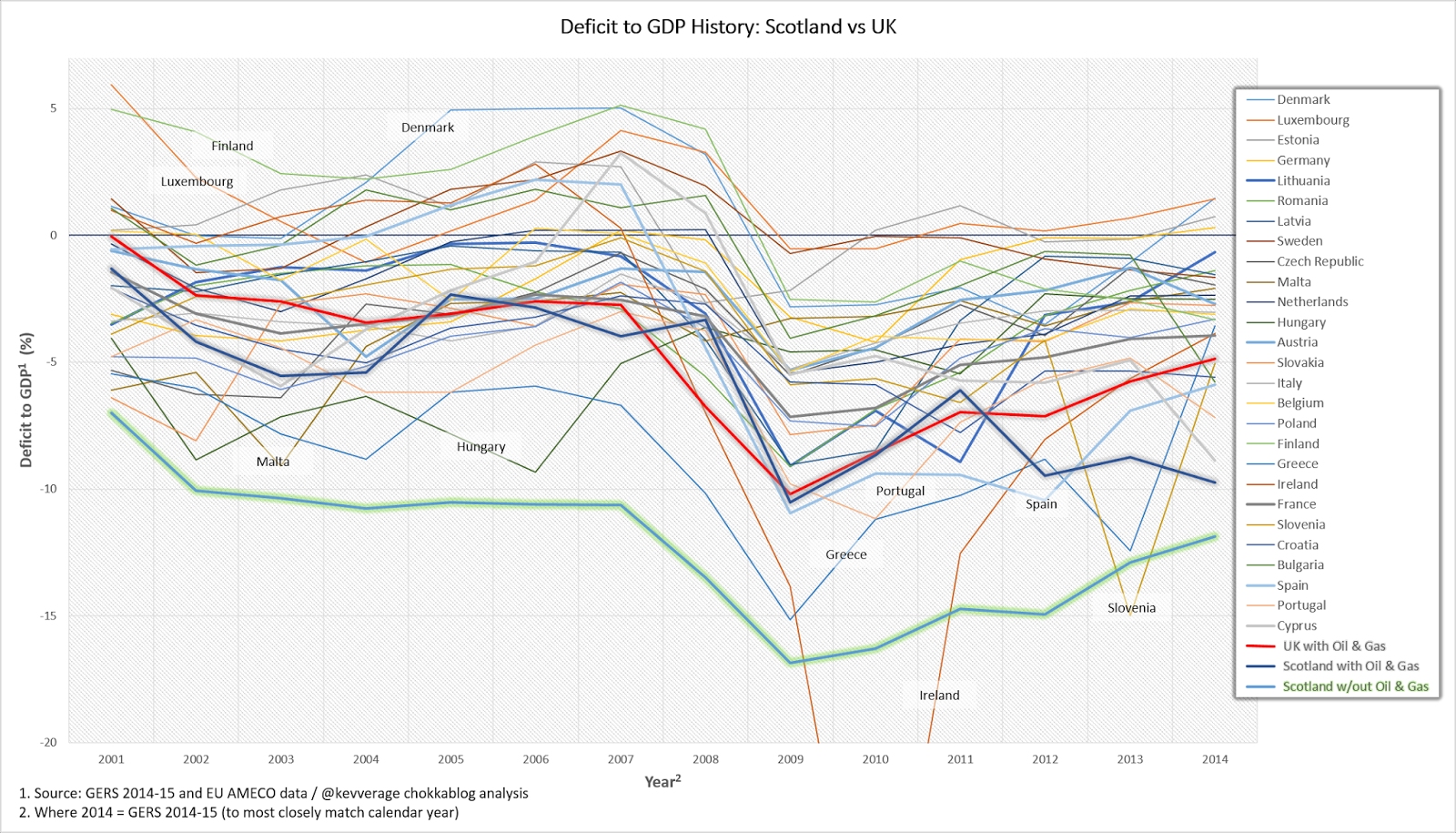
Because for all the complex arguments, mad comedy graphs ludicrously pretending that Scotland is a less viable nation than Greece or Latvia or Cyprus or Malta and bewildering arrays of incomprehensible stats, there are only five things you really need to know about GERS.
Read the rest of this entry →
Tags: too wee too poor too stupid
Category
analysis, debunks, reference, scottish politics, uk politics
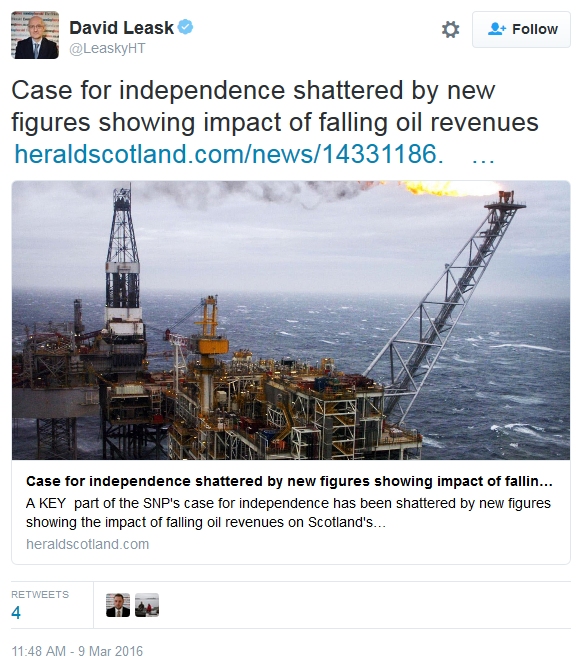
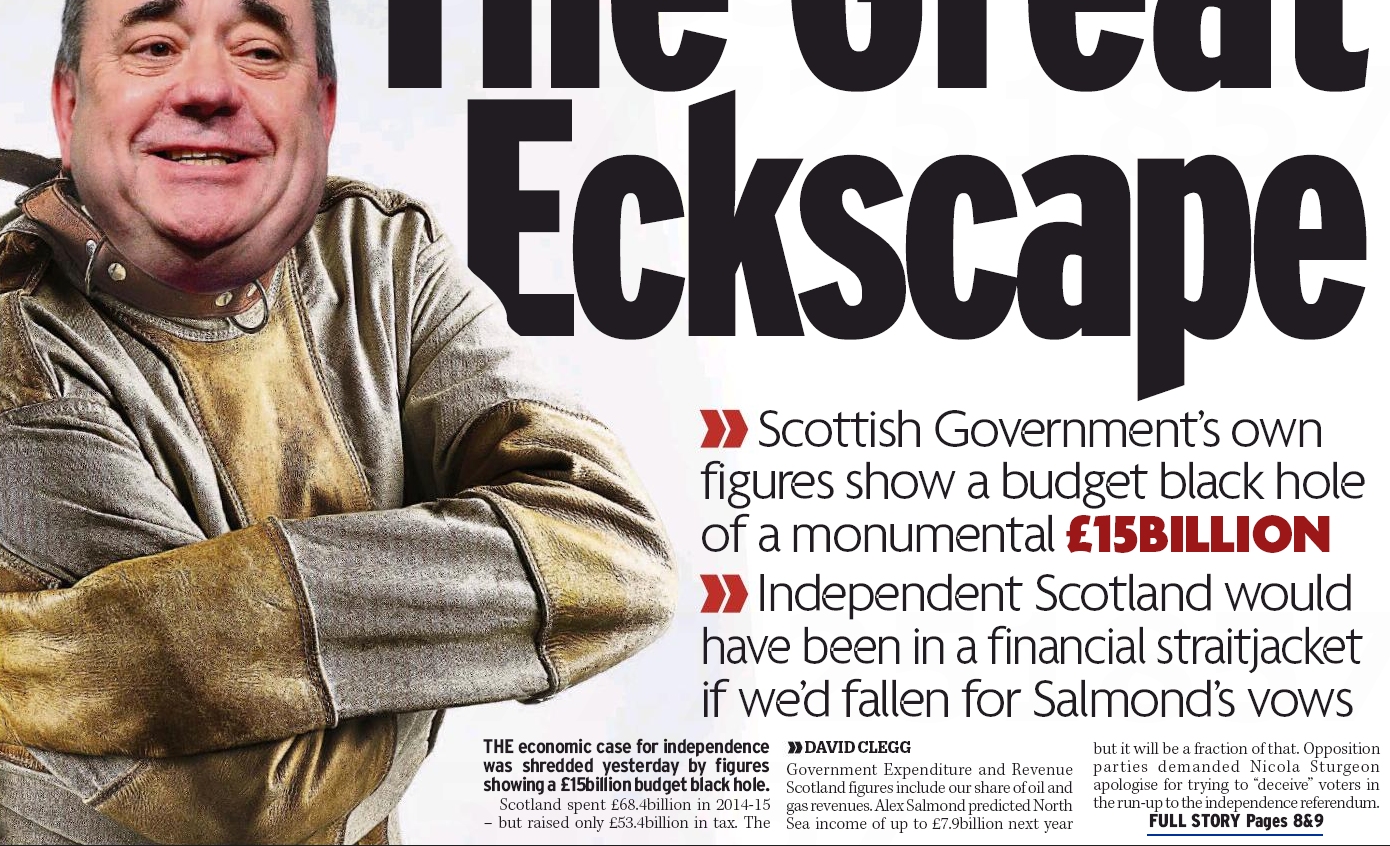
Depending on which parts of the media you were reading yesterday and this morning, the economic case for independence was either “shattered” (the Herald), “demolished” (the Spectator), “shredded” (Daily Record), “smashed to smithereens” (Willie Rennie, bless) or any number of other apocalyptic metaphors for total destruction, by a 1% fall in Scottish revenues resulting from a steep drop in oil prices which led to a notional Scottish budget deficit that by some measures was as high as 10% of GDP.

We must assume, then, that the economic case for the UK being an independent nation was rendered unto ruins in 2009-10, when its deficit exceeded 11% of GDP.
Read the rest of this entry →
Category
analysis, comment, scottish politics, uk politics
Economics: The art of explaining why all of your models fail to accurately predict either the future or the past.
It’s the time of year again when everyone glances at the first page of a dense booklet of complex economic data and immediately starts using it to make wild forecasts and proclamations despite the long-known problems with doing so.

So it’s also, once again, time to try looking a little further to tease out some details that others might have – let’s be generous here – accidentally missed.
Read the rest of this entry →
Tags: black holeDr Craig Dalzelltoo wee too poor too stupid
Category
analysis, scottish politics, stats