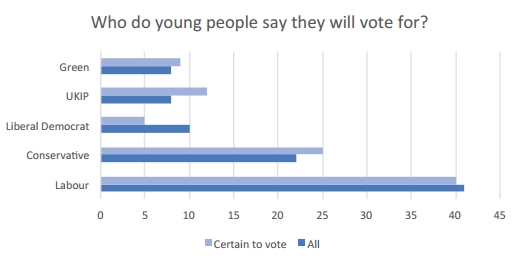
The battle-cry of right-wing Labour apologists all this week has been “realism”. It’s all very well people like Jeremy Corbyn having crazy old principles about what Labour is supposed to stand for, runs the argument, but you can’t argue with public opinion and public opinion is desperate for Labour to become Tories with a slightly softer edge.
“Mental John” McTernan, for example, told the readers of the Telegraph yesterday that Labour’s disastrous, shambolic abstention on the welfare reform bill was the right thing to do because the party “had to show the public it got the message over welfare”.
But what actually IS the public’s message on welfare?
Read the rest of this entry →
Tags: public opinion
Category
analysis, comment, debunks, investigation, stats, uk politics
We’re sorry to keep going on about this, readers, but we’ve been going over and over it in our heads and we just can’t get it to make sense.
Below is the failed Labour amendment to the Welfare Reform And Work Bill:

As you can see, its sole intended purpose was to refuse a second reading to the Bill. Labour voted for their own amendment (an achievement, we suppose), which means they didn’t want to see the bill get a second reading.
You’re with us so far, right?
Read the rest of this entry →
Category
analysis, comment, uk politics
Alert readers will have noticed that for the last week or so we’ve been challenging some of the conventional wisdom about Labour’s election victories from 1997-2005. While the right wing of the party and commentariat regularly insists that Tony Blair was its most successful leader ever, we demonstrated that over the course of his leadership he lost Labour over two million votes, whereas Neil Kinnock’s reign had resulted in a GAIN of three million.
In short, New Labour’s victories were primarily the result of the Conservatives being in a catastrophic state during Blair’s rule, exhausted by almost 20 years of power and scandal and infighting about Europe. With William Hague, Iain Duncan Smith and Michael Howard at the head of a shattered opposition, Labour could have won those elections with Piers Morgan or a Teletubby in charge.

What our research also found was that the most striking thing about the period since Blair became Labour leader in 1994 was a staggering and almost overnight increase in the number of British voters turned off politics altogether.
In 1992 just eight million people entitled to vote stayed at home. By 2001 that number had rocketed to EIGHTEEN million, a 125% increase in nine years, and in May it was still at almost 16 million.
Since Blair, eight million UK citizens who used to vote have simply walked away and washed their hands of the entire political process. That’s quite a legacy, but it’s also an opportunity, because it’s a lot of people waiting for a reason to vote for someone. (Most of them young and/or poor, two traditionally Labour-friendly demographics.)
Bizarrely, it’s an opportunity Labour and its allies seem utterly determined to shun.
Read the rest of this entry →
Category
analysis, comment, uk politics, wtf
The Sunday Times has today released some more of the data from the joint poll it conducted with this site a couple of weeks ago. As well as giving the SNP a 31% lead over Labour for Holyrood 2016, there’s a very interesting stat on Europe.

That lead in England for the UK leaving the EU is surprising – most recent polling has shown something like a 60-40 margin in favour of staying in. We’ll need to wait and see if the poll is an outlier or if there’s been another shift in English opinion.
It’s also interesting in that it blows a hole in the regular assertions of Unionist pundits that there are no real differences in social attitudes on either side of the border. At a time when England is split down the middle, Scotland’s resounding 2:1 majority for staying in Europe has never, to our recollection, been higher.
There’s one more thing of note about the poll, though.
Read the rest of this entry →
Tags: poll
Category
analysis, europe, scottish politics, uk politics
…has for the last 14 years been the None Of The Above Party.

Read the rest of this entry →
Tags: lizards
Category
analysis, stats, uk politics
The Scottish Daily Mail today leads with a screaming banner headline announcing in its trademark style that, according to a poll it commissioned with Survation, Scots are massively opposed to any income tax rises when Holyrood eventually gets power over the rates under the new Scotland Bill.

And the reason that’s weird is that we commissioned a poll on the very same thing just days before, and got a dramatically different answer.
Read the rest of this entry →
Tags: poll
Category
analysis, comment, scottish politics
One of the worst things about running this website is that eventually it causes you to doubt the existence of reason. Things happen that – even putting all partisanship to one side, in so far as is humanly possible – it’s impossible to believe any remotely rational being or organisation would ever think, say or do.

A recent obvious case in point was the election of Jim Murphy as Scottish Labour leader. SNP supporters rubbed their eyes in disbelief as Labour and the media rushed, with apparent sincerity, to proclaim one of Labour’s most right-wing and divisive MPs the party’s saviour.
So unable was the nationalist side to contain its glee and amusement at what was a plainly suicidal move to anyone sane, the Unionist establishment persuaded itself a bluff was afoot and that the laughter masked fear. We all know how that turned out.
But what we want to talk about in this article is how, no matter how often that same tragi-comic farce is played out – in 2007, 2011 and now 2015 – the astonishing fact is that it never seems to make any difference. In defiance of the most famous quote attributed (apocryphally or otherwise) to Albert Einstein, Labour and its cheerleaders keep right on repeating the same actions over and over, expecting different results.
For those of us who cling to reason as the hope of mankind, increasingly despite all the evidence, it can cause outbreaks of incredulous despair. “They just CAN’T be this stupid!”, we exclaim, only for Labour to prove us wrong by offering their long-suffering Scottish members a prospective dream team of Kezia Dugdale and Gordon Matheson.
But we may have had a modest epiphany.
Read the rest of this entry →
Tags: poll
Category
analysis, uk politics
Because our recent Panelbase poll shared a sample with one for the Sunday Times, there was an unasked-for bonus in the data. The ST had asked Panelbase to divide the 1002 Scottish residents into those born in Scotland, those born in England and those born elsewhere (including the rest of the UK).
The paper has a slightly unsavoury track record for doing so, and it did it this time for the sake of running a deeply statistically-iffy question aiming to prove that a lot of Yes voters were anti-English, but we’ll get to that in another article.
What that meant was that we were able to cross-reference the “ethnicity” data against all of our questions, and that resulted in a couple of interesting findings.
Read the rest of this entry →
Tags: poll
Category
analysis, scottish politics
As this site is somewhat on the left of the political spectrum, it’d be all too easy to attack yesterday’s Budget based on its interpretation by what still passes for the UK’s left-wing media. So instead let’s look at it through the eyes of the Daily Mail, which is putting, shall we say, quite a positive spin on it.

Fair-minded readers will concur, we trust, that the Mail’s English and Scottish editions are both portraying George Osborne’s first all-Tory budget in almost 20 years as being a good thing for the nation. But let’s take a look inside. Because when it’s finished with the spin, even the Mail can’t disguise that what happened yesterday was the biggest robbery of the British people in a lifetime.
Read the rest of this entry →
Category
analysis, uk politics
There’s a very strange feature in today’s Daily Record, and it’s not even one of their regular pieces of pioneering and hard-hitting investigative journalism about who’s the hottest guest ever to appear on the Jeremy Kyle show.

The headline screams unequivocally that according to a new Survation poll, fear of the SNP influencing a Labour government was the reason that English voters swung back to the Conservatives, defying polls that said the Tories would be the largest party but be short of an overall majority.
(Weirdly it says that their goal in doing so was to “keep Salmond out of power”, even though (a) Alex Salmond is a humble backbench MP who doesn’t even lead the SNP group at Westminster, let alone the party, and (b) he won his seat anyway.)
The article then produces a flurry of graphs and figures showing that various numbers of supporters of the four UK parties switched their votes to various other parties after being polled (as always happens).
But then there’s something quite important missing.
Read the rest of this entry →
Tags: misinformation
Category
analysis, comment, debunks, media, stats, uk politics
In our latest Panelbase opinion poll, conducted last week in association with the Sunday Times, we wanted to complete the work we started previously in analysing the public’s reaction to Labour’s election strategies.
What we found last time was that almost every decision the party had taken in Scotland under the regional managership of Jim Murphy had been massively at odds with the Scottish electorate.
Whether it was booze at football, full fiscal autonomy or the Named Person initiative for child welfare, the voters were full-square behind the SNP, and every new policy Scottish Labour unveiled doomed them further. Anything that could be got wrong was.
This time we were curious about the effects in the whole UK, and with regard to one landmark moment in particular.
Read the rest of this entry →
Tags: poll
Category
analysis, scottish politics, uk politics
By now you should all have had a chance to marvel at the extraordinary madness that is Scottish Labour’s 51-page suicide note of SNP members who’ve said rude words on the internet since 2012.

You may even have had time to read a data protection expert (and Labour voter)’s assessment of all the ways in which the dossier breaks the law.
Now let’s get down to business.
Read the rest of this entry →
Tags: hypocrisy
Category
analysis, comment, history, investigation, scottish politics