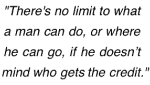
Being a journalist can occasionally present some tricky ethical dilemmas. Today’s Scotland on Sunday carries a story about Scottish Labour’s strife-riddled devolution plans, which attributes this quote to the Scottish branch manager Johann Lamont:

Now, that’s an awkward one for any conscientious reporter. We have to presume that the former English teacher MEANT to say “increase” (or “restore”), rather than “reduce”. But you can’t just casually reverse in print what someone actually said on the assumption that they meant the opposite, so the hapless Andrew Whitaker has to resort to the least-bad option, which is just printing it and hoping nobody notices.
It’s the rest of the article that contains the real nonsense, though.
Read the rest of this entry →
Tags: vote no get nothing
Category
analysis, comment, scottish politics, stupidity
At this week’s First Minister’s Questions, Johann Lamont banged repeatedly on a drum that the Unionist parties never tire of thrashing like an Orangeman in marching season – the notion that an independent Scotland couldn’t afford to live as it does now and would have to raise taxes or cut public spending.
Over and over again Lamont demanded the First Minister say which he would do if Scotland voted Yes, implying the choice wouldn’t have to be made inside the Union:
“If Scotland were outside the United Kingdom, I ask again: how would the First Minister pay for that loss in revenue—by cutting services or by raising taxes?”
Ms Lamont’s colleague Gordon Brown, meanwhile, is about to embark on a tour of Scotland, flitting from city to town to village like some demonic ghostly apparation out of “Tam O’Shanter”, frightening Scots with blood-chilling tales of “black holes” and, most especially, unaffordable pensions.
Sounds like we better stay in the safety and security of the UK, then.
Read the rest of this entry →
Tags: black hole
Category
analysis, scottish politics, uk politics
Three opinion polls this week have all suggested that Labour’s opinion-poll lead over the Conservatives is continuing to shrink. ICM put Ed Miliband’s party just three points in front, as do Ipsos MORI, while Populus have a mere 1% between the two parties.

For perspective, the same distance out from the 2010 general election, the Tories were 16 points in front. By seven months away from the vote, in October 2009, their lead was an incredible NINETEEN points, and they still couldn’t win a majority.
Who fancies Labour’s chances?
Read the rest of this entry →
Tags: Kinnock Factor
Category
analysis, psephology, stats, uk politics
Below is a spread from Aberdeen newspaper the Evening Express tonight, reporting the findings of a poll about the conduct of the city’s council in recent weeks, covering incidents like the Labour/Tory administration’s mind-boggling attempts to ban Scottish Government ministers from all council-owned property and the controversy over a letter sent out with council tax bills which urged people to vote No.

If you click the image you can read the detailed results. And our more alert readers might come to the conclusion that there’s something odd about the paper’s summary.
Read the rest of this entry →
Category
analysis, comment, media, scottish politics
Last month there was a mild flurry of activity in the press about the so-called “missing million” – Scots entitled to vote, but who choose for one reason or another not to. Catchy as it is, the phrase seems a significant understatement. Around four million people in Scotland meet voting criteria, but fewer than half of those turned out for the 2011 Holyrood election, and under 2.5m at the 2010 Westminster one.

Obviously that’s a bad thing in principle in its own right. But it could also be seriously distorting polling for the independence referendum, because – perhaps for the only time in their lives – an awful lot of those missing millions ARE going to go out this September and put a cross in a box. And nobody knows which one.
Read the rest of this entry →
Category
analysis, psephology, scottish politics
As commissioners of opinion polls ourselves, we know all too well that one of the more unwelcome aspects of the pursuit is that sometimes you don’t like the answers you get – we were noticeably dismayed, for example, by one or two of the things revealed about social attitudes in our last poll.

Today’s media extensively covers a Survation poll for the Daily Record which finds the highest Yes vote in some time (despite an “if the referendum was today” preamble, which generally works against Yes), equating to 45% Yes 55% No, with almost a quarter of Labour voters now planning to vote for independence.
The full tables aren’t yet available for analysis as we write this, so to while away the time we decided to have a proper delve in the last one from the same company, run on behalf of the Daily Mail last month. And a couple of things leapt right out at us.
Read the rest of this entry →
Tags: project fear
Category
analysis, psephology, scottish politics, stats
We don’t say it very often, readers, but as a civilised human being with even the merest glimmer of empathy it’s hard not to feel sorry for “Better Together” sometimes. It must be absolute agony for them today, trying to talk about the slightly disappointing GERS figures without screaming “TOO WEE! TOO POOR! TOO STUPID!” at the tops of their voices, which is what they want to do so much they must be able to taste it.

Instead of naked glee, they must do their best to fake concern, and not appear too joyful to be reporting bad news for what they insist is (proudly, of course) their nation. We don’t envy them in having to maintain two faces and lie about their true feelings, no matter how practiced at it they are. The constant vigilance must be incredibly wearing, because dishonesty is exhausting.
The only way to never be caught out, after all, is to never have to remember which lies you told yesterday and to whom. So as always, we’re just going to give you the truth.
Read the rest of this entry →
Category
analysis, comment, scottish politics, stats
The big story in UK news this morning is Ed Miliband’s statement of Labour’s position on an EU referendum. “Ed Miliband will dramatically pave way for in-out referendum on Europe if Labour come to power”, says the Mirror, while “Ed Miliband rules out EU referendum” is the Spectator’s take and the BBC goes with “Ed Miliband says Labour will not commit to EU referendum”. Ah, the media, bringing clarity as ever.

On this occasion, the right-wing magazine is closest to the truth. Miliband’s statement is about as unambiguous as Labour ever get on anything these days – “We strongly believe Britain’s future is in the EU, and my priorities for government after the next election are very different from those of the Conservatives” is pretty hard to misinterpret in the context of the Tories having expressly pledged a referendum long before their manifesto is published.
It is, in the language of politics, a “brave” move.
Read the rest of this entry →
Category
analysis, uk politics
We’ve just watched three hours of the Education and Culture Committee at Holyrood discussing the report on media bias by Professor John Robertson of the University of the West of Scotland, which featured the good professor himself and senior BBC Scotland executives including Ken McQuarrie and John Boothman.

The contrast between Prof. Robertson’s absolute frankness and candour – openly discussing his political views and his mild autism – and the BBC men’s evasion and obfuscation was quite something to behold. We’ll have some analysis this week.
One finding of Prof. Robertson’s report was that the anti-independence media (or for short, “the media”) had a strong tendency to personalise the Yes debate in the form of Alex Salmond, and a piece in today’s Scotsman provides us with a handy illustration.
Read the rest of this entry →
Tags: snp accused
Category
analysis, comment, media, scottish politics
Earlier today we may have given some readers the impression that Gordon Brown’s six-point proposals for the constitutional future of Scotland within the UK were weak, vague and essentially meaningless waffle.
However, now that we’ve seen the recommendations (in a report rather egotistically entitled “Campbell II”) also produced today by Sir Menzies Campbell of the Liberal Democrats, we’ve realised that by comparison Mr Brown has delivered a masterwork of comprehensive, considered and well-thought-out detail.

Get a load – and we do mean a load – of this, readers.
Read the rest of this entry →
Tags: vote no get nothing
Category
analysis, idiots, scottish politics
It’s Monday, so it must be time for Gordon Brown to lumber into the independence debate again. The man who was the least popular Prime Minister of the last 50 years magically transforms into a respected elder statesman when the British left is desperately trying to lend some progressive gravitas to the floundering No campaign in the wake of a series of ill-judged right-wing interventions from Tory ministers and millionaire business tycoons.

So we suppose we’re obliged to spend at least a couple of minutes examining the latest pronouncements of the man who so famously ended boom and bust.
Read the rest of this entry →
Tags: vote no get nothing
Category
analysis, comment
We’ve commented before on the odd way that newspapers can reveal their bias in the way they phrase their reporting, rather than in the actual content of it, which can be entirely factually accurate. As we noted, a particular giveaway is the angle from which they view statistics, and especially opinion polls.
A poll showing 35% of people backing independence will almost always be reported as “ONLY a third back Yes”, whereas one with the exact same numbers for a different question might be presented as “OVER a third distrust Alex Salmond”. The proportion “one third” is in such a manner portrayed as being both a small and a large one, to suit whatever position the publication wishes to promote.
It’s in such a context that we invite readers to ponder today’s Mail On Sunday.
Read the rest of this entry →
Category
analysis, comment, media, psephology, scottish politics, uk politics