What IS going on at the Herald? Yesterday we highlighted a bizarre article which flatly contradicted its own headline, then agreed with it, then contradicted it again. And today another piece by the same author appears to do much the same thing.
At least the headline is a bit more circumspect this time: “Uncertainty claims over EU situation”. But the opening paragraph blares a dramatic statement which doesn’t appear to be supported anywhere in the story.
“The Scottish Government has indicated for the first time that Scotland would not automatically be able to negotiate EU membership from within the organisation if Scots vote Yes in next year’s referendum.”
…is the bold-fonted proclamation from the paper’s Political Editor. But if you read the text which follows it, you’ll struggle to locate anyone indicating any such thing.
Read the rest of this entry →
Category
analysis, media, scottish politics, wtf
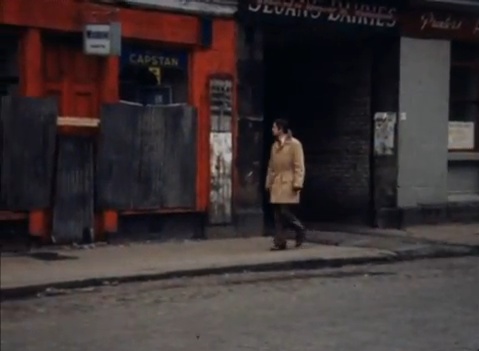
This splendid BBC news piece from 1975 about the Glasgow Underground appears to have been shot in some sort of awful, nightmarish post-apocalyptic wasteland. Or, put another way, a large and once-prosperous city run by Scottish Labour for 50 years.

Read the rest of this entry →
Category
history, media, pictures
We checked with a few people on this one to make sure it wasn’t just us. Today’s Herald carries a story – by Magnus Gardham, no less – that on first glance sounds like good news for supporters of independence. But on closer inspection, it’s an incoherent jumble of word-noise that contradicts itself almost every paragraph. We honestly don’t have a clue what they’re up to over there.
Read the rest of this entry →
Tags: confused
Category
analysis, disturbing, media, scottish politics, uk politics
We’re not going to link to the Brian Wilson article which the Guardian unaccountably lowered itself to publishing yesterday. It’s embarrassing to see a still-widely-respected newspaper debasing its pages with the sort of swivel-eyed ranting you’d normally expect from a drunk shouting at a skip at 7am, which we can only assume the paper paid money for after LabourHame rejected it as being just too bitter and deranged.

One ugly little piece of innuendo is worth picking up on, though. With what’s the closest thing to subtlety in the piece, Wilson grudgingly concedes the SNP’s mandate to hold an independence referendum:
“The difference is that Scotland now has to answer a question which only a minority want to ask: ‘Should Scotland become an independent country?’ This is because, two years ago, 21% of Scots voted nationalist in the Holyrood elections, giving them an overall majority.”
Even in that tiny snippet there are several nasty little lies (nobody voted “nationalist”, for example – they voted for the SNP, which stands for Scottish National Party rather than Nationalist, and many did so despite opposing independence, just as tens of thousands of “nationalists” voted for other parties). But we’ll focus on the “21%” thing.
Read the rest of this entry →
Category
analysis, media, scottish politics, stats, uk politics
After The Referendum, No.1 – Ken Macintosh.

Deputy Assistant Manager, Eastwood Matalan.
Tags: and finally
Category
pictures
FAO John McCormick
Dear Mr McCormick,
Last week you were widely quoted in the press on the subject of voters being informed in advance by both parties in the independence debate of the repercussions of their respective positions winning the vote. For example, your press release stated:
“The Commission has therefore recommended that the UK and Scottish Governments should clarify what process will follow the referendum, for either outcome, so that people have that information before they vote.”
Although your words seem clear to me, they seem not to have been understood by the No campaign. Ruth Davidson and Alistair Darling, for example, have both in recent days indicated their refusal to detail any proposed new devolution settlement, should Scotland reject independence, until AFTER the referendum.
Ms Davidson went so far as to suggest in one TV interview that she thought your comments meant people were unsure whether there would still be a UK Prime Minister after a No vote, and whether UK laws would still apply. As it appears extremely obvious that the “default” position in the event of a No vote would be that everything stayed the same as it is now, it seems unlikely that those were in fact the questions your respondents were asking.
But as we were not privy to your testing, we don’t know specifically which information voters were requesting be made available to them. I wonder, then, if it might be possible for you to issue some clarification on the matter, at least in broad terms.
A great many members of both the UK and Scottish Parliaments were extremely vociferous before the publication of your report in insisting that its recommendations be followed in full by all sides. It would perhaps therefore be valuable if you could be more specific about what sort of information your quote above referred to.
Thanking you in advance,
Rev. Stuart Campbell
Read the rest of this entry →
Category
analysis, scottish politics, uk politics
So, wow. Last month we decided to kick on a little bit as an experiment and put more of our time into the site, and the results were dramatic. But the truth of the matter is that we can’t keep up that level every month, because we have to earn a living. And if a job’s worth doing, it’s worth doing properly.

But here’s a thing: supporters of independence constantly and loudly bemoan the lack of a pro-independence Scottish newspaper, or even just a balanced one committed to the simple old-fashioned goals of fair-minded and truthful reporting.
The last attempt to make a print one crashed and burned a long time ago – as pointedly noted in the image above by Kerry Gill, current political editor of the Scottish Daily Express. And the online Caledonian Mercury, despite being staffed by proper experienced journalists, died (though technically its corpse still twitches faintly once in a while) through a failed funding model, having not found a high enough readership to generate sufficient advertising revenue.
The thing is, it doesn’t have to be that way.
Read the rest of this entry →
Tags: fundraisers
Category
admin
One of the main reasons we started Wings Over Scotland 15 months ago was a recurring frustration at the Scottish media’s constant failure to represent our views. Time after time we’d sit watching the TV with our blood pressure rising, shouting “Why aren’t you asking this CLEARLY lying idiot the staggeringly bloody obvious question that anyone with a IQ higher than a badger’s bawbag would be asking?” at the screen until the neighbours started banging on the wall again.

We’ve come a long way in 15 months, and we can at least now draw a sizeable audience’s attention to such unasked questions. But the phenomenon hasn’t lessened any, and last night’s Newsnight Scotland provided a textbook example.
Read the rest of this entry →
Tags: captain darling, flat-out lies
Category
analysis, disturbing, media, scottish politics
Well, one out of three isn’t bad, we suppose.

We’re a bit confused by point 3, though. “It’s no wonder the SNP support the Government’s plans”, it notes. But hang on a minute – didn’t the No campaign director Blair McDougall tell us just days ago that the SNP “opposed” devolution in 1997? Who to believe? We just don’t know what to think any more.
Tags: and finally
Category
pictures
We know the No campaign is dead set against entering any discussions before the independence referendum, but we were so moved by Willie Rennie’s concern today about Scotland not having enough time to “negotiate over 14,000 international treaties“ in the 16 months between a Yes vote and the first elections to an independent Holyrood that we thought we’d help him out a bit with some advance work.

We did enquire of Mr Rennie as to where these “14,000 international treaties” could be found, but he was too busy helping poor people by fining them £80 a month to answer. Luckily, alert reader Angus McLellan was hot on the case, and swiftly directed us to a handy Foreign Office website featuring the magic number.
We’ve now had a brief skim through some of the UK’s historic agreements with other countries, and to save some time after 2014 we’ve knocked a few off the list.
Read the rest of this entry →
Category
analysis, europe, stupidity, uk politics