We got a letter from the Foreign & Commonwealth Office today. We opened it, read it, and – if we might paraphrase for a moment – it said we were suckers.
Read the rest of this entry →
Tags: confused
Category
scottish politics, uk politics, wtf
We’ve been having a dig through the recent YouGov poll (fieldwork 26-29 November) commissioned by The Sun. It’s full of all manner of interesting data, strengthened by a rather bigger-than-usual sample of 1,919 voters.
We were intrigued to note, for example, that 56% of respondents in England and Wales disapproved of the government’s record (with just 30% in favour), but 55% of those same people thought Scotland should vote to stay in the Union they themselves were so unsatisfied with (just 21% said they’d vote Yes if they had a vote).
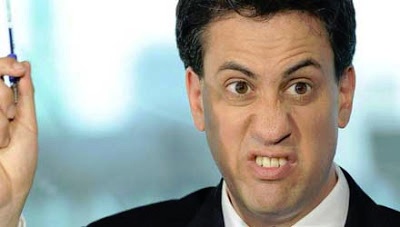
Now, it’s possible to explain some of this apparent contradiction away. For example, fully 90% of UK Labour voters disapproved of the UK government, but 60% still wanted Scotland to vote No and remain subject to it. The rationalisation, of course, is that they think everything would be fine under a Labour UK government.
Don’t they?
Read the rest of this entry →
Tags: Kinnock Factor
Category
analysis, comment, stats, uk politics
Oh, there it is.

Click here for the fascinating full data. And when you hear Labour talk of “pooling and sharing resources” after a No vote, remember where it is that the pool’s located. Because they’ll probably be closing the one near your house.
Category
stats, uk politics
In the light of this week’s dire warnings in the media that a Yes vote would mean supermarket prices becoming more expensive in Scotland than the rest of the UK (and the near-total absence of reporting of all the supermarket chains’ subsequent denials), we were intrigued when an alert reader sent us this link to a price-comparison site.

Maybe our cheese and beer’s just much nicer or something.
Category
scottish politics, stats, uk politics
We know we’ve been talking recently about how the No campaign’s been getting nastier, but it looks like they’re about to ramp things up another notch.

Yikes!
Category
disturbing, leaks, pictures, scottish politics, uk politics
Imagine working for a trade union; one which is formidable and respected, one forever being sought by Radio 4. An indomitable body of professionals who never resort to strikes and scuffles, braziers and megaphones, because they’re so heavy with influence and history that they need only tap the right minister on the shoulder to have their voice heard and heeded.
Imagine working for the magnificent British Medical Association.

When I saw the BMA were recruiting in Glasgow a few years ago I was delighted and surprised. My surprise increased when I was sent to a call centre for the interview. Sitting prim and nervous in the reception area, a tacky room with walls that trembled if you brushed against them, I wondered what this cheap and nasty office could possibly have to do with the great and august BMA.
Read the rest of this entry →
Tags: Julie McDowalllizards
Category
comment, uk politics

——————————————————————————————-
Amount of money saved by Iain Duncan Smith’s “benefit cap” so far:
“Around £6 million”
Amount of money wasted on Universal Credit welfare reform so far:
£120 million (or £140m, or £200m, or £425m)
——————————————————————————————-
The UK government – saving you money on welfare by 2034! (If you’re lucky.)
Tags: arithmetic fail
Category
analysis, uk politics
We all know there’s something strange about Britain. Germany and China have their factories, France and Japan their nuclear power plants. America has Google and Apple and the world’s largest navy. But how is it that Britain, a country that closed its mines and shuttered almost its entire manufacturing industry, is still a major world economy?

The answer is Britain’s best-kept economic secret. It links Grangemouth, the obscene cost of housing in London, the Royal Mail sell-off, Channel Island tax havens and George Osborne’s disregard for the poor, and explains why an incomprehensible financial crisis triggered by bad American mortgages led to the closure of municipal libraries and swimming pools across the UK and a programme of permanent austerity.
And more to the point, it explains why only London, not Scotland or Wales or Yorkshire or Wearside, matters to the British political class today.
Read the rest of this entry →
Tags: Alistair Davidson
Category
analysis, uk politics
Last night’s edition of Scotland Tonight saw a clearly nervous, rambling and seemingly well-refreshed ex-Labour spin doctor Simon Pia called upon to defend “Better Together” chairman Alistair Darling (“as good a frontman as I can imagine to save Britain”, said the Spectator’s Fraser Nelson in that extraordinary accent of his) from a series of attacks by his own side over his stewardship of the No campaign.

Pia played the usual cards that Labour types do when called upon to defend a man who is now distrusted by a majority of Labour voters. Darling was “substance not style”, a serious man with “cross-party appeal” (if you exclude Labour, the SNP and now seemingly a lot of Tories) who had “filleted” the White Paper (without reading it or understanding the one page he did look at) and saved the nation in 2008 “when we looked into the void”.
But not everyone shares Pia’s view of Darling’s integrity and competence.
Read the rest of this entry →
Category
analysis, disturbing, scottish politics, uk politics
When it comes to oil and gas, Scots are used to being treated like backwoods yokels by Westminster, deemed incapable of looking after this valuable resource and lied to about its value. Oil and gas is a priceless treasure to the UK, and Westminster is terrified of losing control of it.

That’s because not only are the billions of pounds in oil and gas tax receipts valuable in and of themselves, but they also halve the balance of payments deficit, thereby protecting the value of the pound.
But how exactly does Scotland turn oil and gas into money?
Read the rest of this entry →
Tags: Scott Minto
Category
analysis, scottish politics, uk politics