Someone asked us yesterday for some facts and figures to help them with a debate, and it got us remembering one that we never see being brought up, perhaps because it’s buried in the archives of the Herald under Sport > SPL > Aberdeen (no, really).

It’s a piece that pre-dates the Scottish Parliament (and is written in a style that makes it seem older still), but it’s a complete mess of broken formatting, clearly the victim of numerous website redesigns, and painfully hard to read even when rescued from behind the paper’s paywall.
So we’re going to preserve it for posterity here in a cleaned-up, more user-friendly presentation, because it’s pretty much dynamite.
Read the rest of this entry →
Category
analysis, comment, history, media, reference, scottish politics, uk politics
There’s a rather strange article by Peter Kellner, CEO of polling company YouGov, in today’s Guardian. It makes a whole series of dubious claims, one of the most startling being the assertion that “Labour is the pro-welfare party-of-the-heart”, a view somewhat at odds with the party’s stated intent to be “tougher than the Tories on benefits”.
But perhaps most curious of all was the piece’s strapline.

Because the idea that Labour was winning any battle for the hearts and minds of the British public over public-sector cuts was quite dramatically contradicted the very same day by some data released by… YouGov.
Read the rest of this entry →
Category
analysis, stats, uk politics
The Huffington Post, 15 December 2013:
“The number of Britons who think Ed Miliband is likely to be the prime minister after the next election has fallen dramatically, according to a poll.
Research by ComRes for the Independent on Sunday and Sunday Mirror found 21% believed the Labour leader would be in No 10 after the next election, down 10 points since May.”
This, remember, is after a summer in which the nation’s political commentators almost universally agreed that Miliband’s conference promise of an energy price freeze and subsequent talk of a cost-of-living crisis was winning the hearts of the country.
Last week three separate opinion polls showed Labour’s lead over the Tories down to a pitiful five points, despite 70% of the population saying they’d felt no benefit from Britain’s feeble economic “recovery”.
We don’t think Labour has ever sacked a leader who hadn’t contested at least one general election. Ed Miliband will lead them to the polls in 2015, and only one in five Britons thinks he’ll end up in Number 10. Don’t take our word for it. Don’t heed the experts. Don’t even examine the statistics. Listen to the people who’ll be voting.
Tags: Kinnock Factorqftticktock
Category
analysis, stats, uk politics
It was nice to get a wee plug this morning on Radio Scotland’s always-interesting “Headlines” programme. Their online round-up talked about our piece on Scandinavian taxation, and contrasted it with one written by Scottish Conservative MSP Murdo Fraser for the right-wing “ThinkScotland” blog, in which he disputed the widely-held, and oft-decried by Yes supporters, notion that the UK was one of the most unequal countries in the civilised world.

Now, anyone who’d also read Wings columnist Julie McDowall’s superb, blood-boiling article on foodbanks in today’s Sunday Herald might naturally be rather sceptical of Fraser’s claim that the UK was an egalitarian paradise of wealth distribution, but he provided a link, so we had a look.
Read the rest of this entry →
Category
analysis, investigation, reference, scottish politics, stats, world
One of the great battle cries of the No campaign is the insistence that an independent Scotland couldn’t possibly be a “land of milk and honey” (even though nobody has ever actually said that it would). You simply can’t, we’re constantly told, run a country with Scandinavian levels of public services on US levels of taxation.

That, of course, is a matter of opinion, rather dependent on what you want that country to spend its money on – it’s a lot easier to afford pensions if you haven’t spunked all your cash on a load of nuclear submarines and aircraft carriers.
But that’s by the by. To make a better, Nordic-style Scotland, we’re warned, we’d all have to pay much more tax, and if there’s one thing that terrifies British people beyond sanity it’s the threat of higher tax. But just for a moment, let’s assume that’s really the choice, and have a quick quiz.
Read the rest of this entry →
Category
analysis, reference, scottish politics, stats, uk politics, world
The Scottish media often complains that the supporters of independence attack it as biased merely for reporting news that they don’t like. It’s sometimes justified in doing so – it’s foolish to indulge the delusion that amid the constant avalanche of “Major blow to SNP/Yes campaign” headlines, there aren’t some actual blows now and again.

Of course, the media has only itself to blame that nobody listens when it cries “Wolf!” for the 20th time that month. There are times when a “story” is so nakedly a piece of agenda-driven propaganda rather than journalism that in publishing it the press abandons all right to expect to ever be treated as an impartial chronicler of events.
Today is one of those times.
Read the rest of this entry →
Tags: flat-out liesmisinformation
Category
analysis, comment, europe, media, scottish politics, uk politics
We’ve been having a dig through the recent YouGov poll (fieldwork 26-29 November) commissioned by The Sun. It’s full of all manner of interesting data, strengthened by a rather bigger-than-usual sample of 1,919 voters.
We were intrigued to note, for example, that 56% of respondents in England and Wales disapproved of the government’s record (with just 30% in favour), but 55% of those same people thought Scotland should vote to stay in the Union they themselves were so unsatisfied with (just 21% said they’d vote Yes if they had a vote).
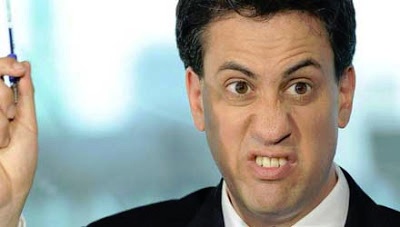
Now, it’s possible to explain some of this apparent contradiction away. For example, fully 90% of UK Labour voters disapproved of the UK government, but 60% still wanted Scotland to vote No and remain subject to it. The rationalisation, of course, is that they think everything would be fine under a Labour UK government.
Don’t they?
Read the rest of this entry →
Tags: Kinnock Factor
Category
analysis, comment, stats, uk politics
The wording of that headline isn’t strictly accurate, because the Claim Of Right For Scotland – signed in 1989 by over 80% of Scottish MPs, and many other politicians and representatives of “civic Scotland” – isn’t a law, and has no binding force.

Nevertheless, it’s a document that carries a certain amount of political weight, as an open acknowledgement by Labour and the Liberal Democrats that the people of Scotland (not Parliament and the monarch, as is the case in England) are sovereign and are entitled to determine the form of government they want.
Up to a point, anyway.
Read the rest of this entry →
Tags: vote no get nothing
Category
analysis, history, scottish politics
Alert readers will doubtless recall the recent shenanigans at Holyrood concerning the bedroom tax, in which Labour furiously demanded that the Scottish Government subsidised the Westminster government’s brutal attack on the poor by slashing £50m from services elsewhere, but refused to say what they’d cut to find the money.
(Although Jackie Baillie did have one memorably creative idea to achieve almost 15% of the necessary savings by travelling back in time and undoing some investment that paid for itself 20 times over.)

We condemned Labour’s craven cowardice at the time, but information revealed this week casts the party’s action in, remarkably, an even worse light.
Read the rest of this entry →
Tags: hypocrisy
Category
analysis, comment, scottish politics
Oh dear lord. The No campaign really does seem hell-bent on making life hard for those of us who occasionally enjoy mocking it by (slightly) exaggerating the depths of its “Project Fear” scaremongering strategy. They’ve attempted to terrify Scots with uncertainty over the price of stamps, mobile-phone roaming charges and having to buy in Strictly Come Dancing, but none of it’s worked.

So now they’re pulling out the big guns: baked beans.
Read the rest of this entry →
Tags: project fear
Category
analysis, scottish politics

——————————————————————————————-
Amount of money saved by Iain Duncan Smith’s “benefit cap” so far:
“Around £6 million”
Amount of money wasted on Universal Credit welfare reform so far:
£120 million (or £140m, or £200m, or £425m)
——————————————————————————————-
The UK government – saving you money on welfare by 2034! (If you’re lucky.)
Tags: arithmetic fail
Category
analysis, uk politics