As we always say, we don’t set a lot of store by polls at this stage. We didn’t get all overexcited by the ones showing big jumps towards independence in the last couple of weeks, and nor are we downcast by the newest Panelbase showing a small drop.

But there WAS something interesting and potentially significant about it.
Read the rest of this entry →
Category
analysis, scottish politics, stats
We’ve speculated on a few occasions recently on the effect on Scottish public opinion of almost the entire Scottish media being owned and controlled from outside Scotland. So we thought it was time we actually put some facts and figures to it.
Read the rest of this entry →
Category
analysis, culture, media, reference, scottish politics
There’s a pretty in-depth YouGov poll out this morning on the subject of attitudes towards immigration in the UK and Scotland. Some of the results are a little dismaying, others less so, but the media reaction has been predictably superficial.
“Scots want immigration cut and more control”, yells the Scotsman, while the Express goes with “Scots demand curb in migrant numbers” and the Daily Mail unsurprisingly goes for the most extreme xenophobic and anti-SNP interpretation possible:

Only the Herald finds a positive angle, with “Scots more liberal about immigration impact than rest of UK”. But those last two headlines aren’t merely an example of how the same polling data can be spun and twisted to give diametrically opposite impressions. A closer look at the figures shows us how sometimes poll results just don’t make a whole heap of sense in the first place.
Read the rest of this entry →
Category
analysis, scottish politics, stats, uk politics
From Oddschecker. Click to enlarge.

Proves nothing, of course. But the trend’s the thing, readers.
Category
analysis, scottish politics, stats
For some time now, we’ve been documenting a couple of intriguing aspects of the No campaign. One is its apparent shortage of grassroots activists, leaving “Better Together” to instead rely on the Scottish and UK media to get its message out. The other is a reluctance to engage in public debate with adults.

Where BT has deigned to participate in public hustings at all, the bulk of the events have been those at schools and colleges. Invited to debate independence in front of crowds of grown-ups, the No camp is oddly reticent, as we discovered ourselves last year when we offered to pay for and set up a head-to-head, with a neutral and mutually-approved chair, between respective campaign figureheads Dennis Canavan and Alistair Darling, getting only abuse in response.
Of course, a bunch of evil cybernats such as ourselves might expect to be rebuffed. But what if the cuddly, respectable official Yes Scotland organisation had a go?
Read the rest of this entry →
Tags: debatesproject fearttallinn protocols
Category
analysis, comment, scottish politics
The Sun’s editions on both sides of the border today go in heavy with the results of a YouGov poll showing a dramatic turnaround in the percentage of English (and Welsh) people who want Scotland to leave the UK.

Or at least, SOME of the results.
Read the rest of this entry →
Category
analysis, media, scottish politics, uk politics
We’ve already mentioned this in passing, but it’s worth pulling out in its own right, because people hardly ever bother to click links in features and it’s kind of important.
Late last year we had a bit of an epiphany in terms of realising the implications of Scottish Labour’s draft proposals for giving more powers to the Scottish Parliament in the event of a No vote in the independence referendum. We suggested that the plans were in fact a trap, which would be a disaster for Scotland and see billions of pounds of cuts in the Scottish budget.
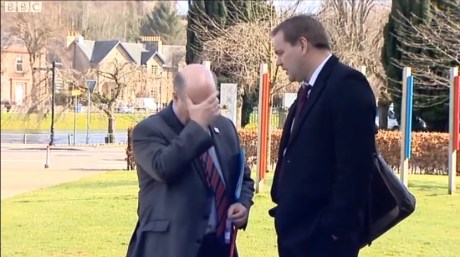
What we weren’t expecting was for Labour MP Ian Davidson to confirm it for us.
Read the rest of this entry →
Category
analysis, scottish politics
There’s both good and bad news for the embattled Scottish Labour “leader” in today’s newspapers. But before we get to that, we’d like you to watch this.
The gent posing the rather lengthy question is Sean Clerkin, the man Iain Gray hid from in Subway. We must admit we’re not quite sure why he thinks Johann Lamont has anything to do with Atos sponsoring the Commonwealth Games – something which would presumably be a matter for the Scottish Government and/or Glasgow City Council, neither of which she controls – but the Labour MSP’s reaction is remarkable.
Read the rest of this entry →
Category
analysis, comment, scottish politics
We were a little perplexed this morning by the Daily Record’s banner headline.

And not just because of the unusually generous use by the Labour-supporting paper of the term “SNP Government” (rather than “Scottish Goverment”) on a good-news story.
Read the rest of this entry →
Category
analysis, comment, media, scottish politics
It’s not as if the Financial Times doesn’t have history with dropping great big payloads of high explosive into the middle of the independence debate late on a Sunday night. But a piece coming up in Monday’s edition (and online tonight) is going to choke a few breakfasts in London tomorrow morning.
Read the rest of this entry →
Category
analysis, comment, media, scottish politics, uk politics
We take our hats off to the No campaigners who braved a cold, dark Scottish morning to go and hand out leaflets to the public at train stations across the country today.

We’d have preferred it if they were distributing leaflets that weren’t packed with a litany of flat-out lies, of course, but we suppose you can’t have everything.
Read the rest of this entry →
Tags: hypocrisysmears
Category
analysis, pictures, scottish politics