What IS going on at the Herald? Yesterday we highlighted a bizarre article which flatly contradicted its own headline, then agreed with it, then contradicted it again. And today another piece by the same author appears to do much the same thing.
At least the headline is a bit more circumspect this time: “Uncertainty claims over EU situation”. But the opening paragraph blares a dramatic statement which doesn’t appear to be supported anywhere in the story.
“The Scottish Government has indicated for the first time that Scotland would not automatically be able to negotiate EU membership from within the organisation if Scots vote Yes in next year’s referendum.”
…is the bold-fonted proclamation from the paper’s Political Editor. But if you read the text which follows it, you’ll struggle to locate anyone indicating any such thing.
Read the rest of this entry →
Category
analysis, media, scottish politics, wtf
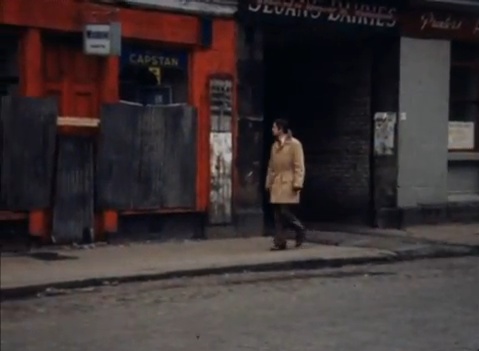
This splendid BBC news piece from 1975 about the Glasgow Underground appears to have been shot in some sort of awful, nightmarish post-apocalyptic wasteland. Or, put another way, a large and once-prosperous city run by Scottish Labour for 50 years.

Read the rest of this entry →
Category
history, media, pictures
We checked with a few people on this one to make sure it wasn’t just us. Today’s Herald carries a story – by Magnus Gardham, no less – that on first glance sounds like good news for supporters of independence. But on closer inspection, it’s an incoherent jumble of word-noise that contradicts itself almost every paragraph. We honestly don’t have a clue what they’re up to over there.
Read the rest of this entry →
Tags: confused
Category
analysis, disturbing, media, scottish politics, uk politics
We’re not going to link to the Brian Wilson article which the Guardian unaccountably lowered itself to publishing yesterday. It’s embarrassing to see a still-widely-respected newspaper debasing its pages with the sort of swivel-eyed ranting you’d normally expect from a drunk shouting at a skip at 7am, which we can only assume the paper paid money for after LabourHame rejected it as being just too bitter and deranged.

One ugly little piece of innuendo is worth picking up on, though. With what’s the closest thing to subtlety in the piece, Wilson grudgingly concedes the SNP’s mandate to hold an independence referendum:
“The difference is that Scotland now has to answer a question which only a minority want to ask: ‘Should Scotland become an independent country?’ This is because, two years ago, 21% of Scots voted nationalist in the Holyrood elections, giving them an overall majority.”
Even in that tiny snippet there are several nasty little lies (nobody voted “nationalist”, for example – they voted for the SNP, which stands for Scottish National Party rather than Nationalist, and many did so despite opposing independence, just as tens of thousands of “nationalists” voted for other parties). But we’ll focus on the “21%” thing.
Read the rest of this entry →
Category
analysis, media, scottish politics, stats, uk politics
One of the main reasons we started Wings Over Scotland 15 months ago was a recurring frustration at the Scottish media’s constant failure to represent our views. Time after time we’d sit watching the TV with our blood pressure rising, shouting “Why aren’t you asking this CLEARLY lying idiot the staggeringly bloody obvious question that anyone with a IQ higher than a badger’s bawbag would be asking?” at the screen until the neighbours started banging on the wall again.

We’ve come a long way in 15 months, and we can at least now draw a sizeable audience’s attention to such unasked questions. But the phenomenon hasn’t lessened any, and last night’s Newsnight Scotland provided a textbook example.
Read the rest of this entry →
Tags: captain darlingflat-out lies
Category
analysis, disturbing, media, scottish politics
This came out quite a few days ago, but didn’t get the attention it merited. Once again, we invite readers to ponder the “invisible hypothetical” of whether the Scottish media would have shown such complete disinterest in a piece of investigative journalism which revealed an elected representative of the SNP and some of its prominent activists discussing their own party’s complete uselessness.

We do accept that Scottish Labour being in shambolic disarray isn’t exactly hold-the-front-page stuff, and is in fact somewhere on a par with “Rain forecast for Hebrides” or “Scottish rugby team beaten at Twickenham”. But clearly the bar for headline stories is rather lower than it used to be, so you’d think it’d at least get a passing mention.
Read the rest of this entry →
Tags: debatesqft
Category
media, scottish politics
One of the problems for anyone highlighting media bias is the “invisible hypothetical”. Take, by way of example, this snapshot of today’s Scotsman website front page:

The headline on the first piece especially is an astonishing piece of work. Rather than report that Parliament had passed a motion criticising the UK government’s welfare reforms (something given extra poignancy by the article below it, and despite Labour voting with the Tories and Lib Dems against the motion), the paper mind-bogglingly manages to twist the story into an attack on the SNP for not explicitly providing an alternative plan – even though Holyrood has no powers over welfare.
We invite any Wings Over Scotland readers with an idle moment to ponder what the headline might have been had it been Labour attacking the SNP in similar circumstances. We’ll get you started – you’ll be wanting the word “ACCUSED”.
Read the rest of this entry →
Category
comment, media, scottish politics
We hadn’t previously bothered commenting on the Guardian cartoon by Steve Bell that had a lot of independence supporters hot under the collar this week. We’d assumed, as seemed the most likely explanation, that it had actually been a comment on what David Cameron was alleged to have mouthed to Angus Robertson at Prime Minister’s Questions, and that Cameron was therefore the main intended target.

We worried that the nationalists who beseiged the paper with angry comments were perhaps being a little oversensitive and looking for offence where none had been meant. Ironically, the cartoon happened only days after we’d highlighted our own habitual inability to understand what Bell’s cartoons were supposed to be about, and that comment turned out to be prophetic, because we had indeed called it wrong.
Read the rest of this entry →
Tags: britnatscartoons
Category
media, uk politics
Alex Salmond’s appearance on Scotland Tonight this week raised an issue we’ve been meaning to address for a while, so let’s do it now before we forget again.
Of the numerous polls of the last few months, the most encouraging for supporters of independence was the one conducted by Panelbase for the Sunday Times in late October. It showed a pretty tight race at 37% Yes to 45% No, but the most interesting aspect was how the numbers changed when voters were asked for their opinion in the hypothetical scenario that they expected the Conservatives be returned as either a majority or coalition government at the 2015 Westminster general election.
In that scenario, independence leapt ahead with a massive 10% swing, to lead by 52% to 40%. But much less reported by the media was another finding of the poll.
Read the rest of this entry →
Category
analysis, media, scottish politics, stats, uk politics
In a Twitter conversation yesterday, we suggested that a solution to the problem of biased reporting in the Scottish media might be to adopt a variant of the “Whizzer and Chips” approach. That is, you’d have two newspapers in one – one way round the news would be presented from a Unionist perspective (as it is now), but if you flipped the paper over and read it from the other end it’d have all the same stories, except covered by independence-friendly journalists.

It looks like the Guardian has tentatively taken the idea up already.
Category
comment, media, scottish politics, wtf
Scottish Government proposals for regulated referendum spending limits:
YES side: £1,250,000
NO side: £1,500,000
(advantage of £250,000 to NO campaign)
Electoral Commission recommendations for regulated referendum spending limits:
YES side: £2,994,000
NO side: £2,931,000
(advantage of £63,000 to YES campaign)
Oh no! It’s another defeat for the SNP!
Read the rest of this entry →
Category
analysis, media, stats