For those of you wanting to look at the report on broadcasting bias from the University of the West of Scotland, we’ve uploaded it to the Repository, and you can also grab it directly from this link. Thanks to the alert readers who sent it in.
Category
analysis, media, scottish politics
We can’t be the only people, surely, to find the latest “Better Together” gambit one of their strangest yet. Never mind the made-up figures or the spurious assertions or their usual habit of having headline amounts which use cumulative sums over many years to make numbers sound bigger. Just look at the barely-concealed subtext here:

“Don’t leave the UK, or you’ll have to give your money to the English! Eurgh!”
Read the rest of this entry →
Category
analysis, comment, europe, scottish politics, uk politics
When we started the week with news of the UK government’s statement on debt, we wondered aloud whether it would be a game-changing moment. Judging by the No camp’s reaction since then, shrieking and flailing and lashing out blindly in all directions simultaneously, our question’s been answered.

It’s been hard to keep track of it all, but we’ll have a go.
Read the rest of this entry →
Tags: project fearsmearsthe positive case for the union
Category
analysis, comment, media, scottish politics, wtf
Alistair Darling double-teamed Scotland’s current affairs shows last night, appearing at length on both Scotland Tonight and Newsnight Scotland in order to blink furiously in turn at first Bernard Ponsonby and then Gordon Brewer.

The STV man largely wasted his opportunity, spending the bulk of the interview talking about live debates, but Brewer did a much better job of putting Darling on the spot in several areas. Indeed, with the “Better Together” chairman’s very first words onscreen, the BBC interviewer drew from him a huge and fundamental lie that sits at the very heart of the independence debate. Stand back, because here it comes.
Read the rest of this entry →
Tags: captain darling
Category
analysis, comment, scottish politics
Here’s Labour MSP Kezia Dugdale today:
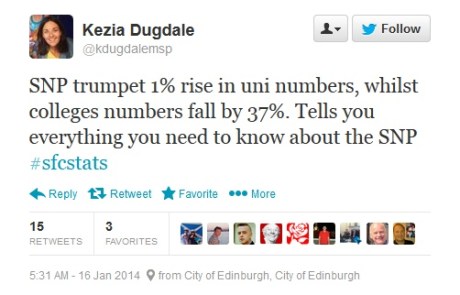
Except that’s not quite EVERYTHING we need to know, is it, Kezia?
Read the rest of this entry →
Tags: misinformation
Category
analysis, scottish politics, stats
Gah. Why is it that any time we’re ever vaguely nice about the Daily Record in public, they immediately pull an idiotic stunt like this and make us look like chumps?

Watch and marvel, readers, as a headline disintegrates in front of your very eyes.
Read the rest of this entry →
Tags: misinformation
Category
analysis, media, scottish politics
The only way never to be caught out, it’s said, is to always tell the truth, because then you never have to worry about remembering which lies you told to who. And since we’d be lying if we told you that we weren’t enjoying watching the No campaign’s catalogue of falsehood beginning to turn in on itself, as one lie attacks another, we won’t bother.

The UK government’s dramatic debt announcement this week may have marked the opening of the floodgates. Because, to complete this appalling car-crash of mixed metaphors, the whole rotten edifice is starting to crumble down about their ears.
Read the rest of this entry →
Category
analysis, comment, scottish politics
(Now to questions typed by someone with a rudimentary command of written English.)

Because as we know “Better Together” will have quite a lot of trouble coming up with any coherent replies, we’ve had a bash ourselves while we wait for them to get started.
Read the rest of this entry →
Tags: and finally
Category
analysis, comment, scottish politics, uk politics
Now here’s an explosive thing to drop at 10 o’clock on a Sunday night.

Click the image to read the full Financial Times story. Did the game just change?
Read the rest of this entry →
Category
analysis, comment, scottish politics, uk politics
It says something about the baleful influence of the right-wing press (not to mention Tory, UKIP and Labour politicians desperate to seek its favour) that some people in Scotland mention immigration as a reason for voting No.

Of the many scare stories originating south of the border, this one is among the least applicable to Scotland. (But is still perpetuated in the media because no major Scottish newspapers are actually owned here.) Scotland needs immigrants, and without sustained immigration over the next half century, we could be in trouble.
Read the rest of this entry →
Tags: Andrew Leslie
Category
analysis, europe, scottish politics, uk politics
The Scotsman and Herald both carry stories today reporting an Ipsos-MORI poll which found that only 14% of voters considered themselves to be “well-informed” about the referendum debate, and that two-thirds of the electorate had difficulty in discerning whether what they were being told was true or not.
Since this site’s entire reason for existence is to demonstrate that what much of the No campaign and the Scottish media tells people is either distorted, misleading or flat-out untrue, we can’t say those findings surprise us much. But there was an interesting nugget buried in the poll data which the papers didn’t pick up on.
Read the rest of this entry →
Category
analysis, scottish politics, stats