Readers may recall that a few days ago we highlighted a rather bizarre confusion on the part of the anti-independence movement, which is more commonly known as “Better Whenever” or something like that. Faced with a poll in which 11% of respondents wished to completely abolish the Scottish Parliament and end the devolution experiment, the No campaign decided that such people were in fact “supporters of devolution” and tailored their promotional materials accordingly.
We think we may have solved this baffling puzzle, however, and the key was in a Twitter message posted earlier today by the campaign’s director Blair McDougall.

Unaccountably, Mr McDougall appeared to be under the impression than the SNP had “opposed” devolution in the 1990s. (And presumbly most pertinently around the time of the 1997 referendum on the subject.) That didn’t quite seem to square with our, in fairness, increasingly-fallible memory of the period, so we did a little research.
Read the rest of this entry →
Tags: confusedflat-out lies
Category
comment, disturbing, scottish politics
There wouldn’t be many people left in the No campaign if these were the rules.

So remember, folks – calling someone a Nazi isn’t political debate. Nazis weren’t comical figures of fun. That sort of poison is “sick abuse and gutter politics”, and must be stamped on if we’re ever to raise the level of debate.
(Another nugget from the Scottish Political Archive.)
Tags: and finallybritnatshypocrisysmearssnp accused
Category
pictures, scottish politics
We know for certain that a good many Scottish newspaper and broadcast journalists read this website, so maybe one of them will enlighten us about something. The latest Scottish Social Attitudes Survey report contained a wealth of tables and statistics in respect of the independence debate, but the entire media seized, with complete and startling uniformity, on one in particular.
It was a curious choice to highlight, as it related to a vaguely-worded, ambiguous question with no relevance to the options which voters will actually choose between in the referendum. Yet the very same survey contained a much more interesting set of results which got either a dismissive passing mention or no coverage at all.

Since, as we’ve already established, there’s no Grand Unionist Black-Ops Society which meets in Pacific Quay to decide how best to serve the grim needs of the No campaign, we’d honestly like to know how not one single newspaper, TV channel or radio station thought this particular question merited lead status in their coverage of the SSAS. Because it presents a radically different picture of Scottish opinion to the one absolutely everyone decided, by miraculous coincidence, to paint.
Read the rest of this entry →
Tags: vote no get nothing
Category
analysis, media, scottish politics, stats
It’s a real bonus for us when other people dissect something so comprehensively, from a variety of angles, that we don’t have to bother. The solitary piece of what could conceivably be described as solid content in Ruth Davidson’s speech in Edinburgh yesterday appeared to comprise a well-known football chant, which we’ll paraphrase for sensitive readers: “We’re [not of a very high standard], and we know we are”.

Fortunately, we’ve been saved some time in pulling it apart in detail thanks to three excellent and forensic examinations by the unlikely trinity of Lallands Peat Worrier, Alex Massie in the Spectator and – heavens above – Alan Cochrane in the Telegraph. We’re off now to check our temperature and make sure we don’t have a fever.
Tags: vote no get nothing
Category
analysis, media, scottish politics
As we’ve noted before, media bias is a subtle beast. It doesn’t (we think) take the form of dastardly late-night meetings where BBC or Scotsman editors gather to plot the next day’s subversion of the Yes campaign. Much of it comprises things journalists often aren’t even consciously aware they’re doing, as documented by Edward Herman and Noam Chomsky in their remarkable book “Manufacturing Consent”.
(We’ve appended a footnote below this piece by Douglas Daniel, summarising a few of the book’s core principles as they can be applied to the independence debate.)

Let’s be uncharacteristically charitable, then, and assume honest intentions when we examine an interesting piece by Magnus Gardham in the Herald today, which goes by the headline “PM’s Euro gamble has strengthened SNP’s hand”.
Read the rest of this entry →
Category
analysis, media, scottish politics
We love when people send us amusing things. Here’s a beauty, featuring fun-loving “Better Together” campaign chief (and former “director of David Miliband’s shadow activist base”, which sounds very exciting) Blair McDougall, speaking way back on the 24th of March 2011 – just six action-packed weeks before the Holyrood election:
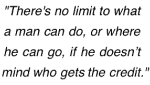
“Deprived of government power after our longest period in office, there is something almost therapeutic about finding new ways to make change happen. Unless you are lucky enough to be a Welsh minister, Labour council leader or (after May’s elections) a Scottish Labour minister, you are unlikely to wield executive power any time soon.”
This week, Mr McDougall’s been making similar proclamations about the result of the independence referendum, except rather further out from the event. We hope he’s as good at predicting (and as baselessly complacent) now as he was two years ago, and every bit as successful in achieving his aims.
Category
comment, scottish politics
We’ve pilfered the files of the tremendous Scottish Political Archive before (you’ll have seen one here, for example), but in the light of today’s earlier post and a comment on it from an alert reader directing us to this fantastic piece about the 1979 No campaign, we’ve been rummaging around in there again. We particularly enjoyed this image (click to enlarge) and its contents, from a campaign group called “Scotland Is British”.

There’s pure gold in almost every line (we particularly enjoyed the description of independence as “ultimate separation” in section 4, and how everything predicted as a dire consequence of devolution in section 3 happened anyway without it), but the most familiar of the many top-drawer zingers was in section 6.
Read the rest of this entry →
Tags: flat-out lies
Category
analysis, media, scottish politics
We owe SNP communications officer Erik Geddes an indirect hat-tip for this one, as a link he posted to something else on Twitter led us to discover this superb piece from the Herald archives. It’s from the 28th of February 1979, the day before the first referendum on Scottish devolution – the one which resulted in a Yes vote, but which was rejected on the grounds of a rigged amendment by a Scottish Labour MP, delaying the return of a Scottish parliament for 20 years.

It’s absolutely startling to read the “No” responses and see just how indistinguishable most of the dire warnings about the consequences of an “Assembly” are from the arguments against independence we hear now, and to also note how few of them (in fact, none) came true when devolution finally arrived.
Read the rest of this entry →
Tags: too wee too poor too stupid
Category
analysis, comment, media, scottish politics
Earlier today we had a wee pop at the Herald for the headline of this story:

The reason for our complaint was what we felt to be the misrepresentation of a poll asking a multiple-choice question about the Scottish constitution:
“What clearly WOULDN’T be fair, though, would be to present those statistics as a drop in the “Yes vote”, because the SSAS’s multiple-optioned findings on an obsolete 14-year-old form of a “constitutional preference” poll bear no relation whatsoever to any “Yes/No” question that’ll be asked in 2014.”
So it was a nice surprise to later, by sheer chance while browsing around for nothing in particular, happen across the same story with a slightly different tone. Evidently the paper had listened to reasonable, fair criticism and taken admirably prompt action.
Read the rest of this entry →
Category
analysis, media, scottish politics
Poor old “Better Together”. We already knew they had some difficulty with basic counting, but today it seems their reading isn’t up to much either. Desperate to deflect attention from the hideous hole they’ve dug themselves into over Europe, they’ve seized on the latest Scottish Social Attitudes Survey showing (depending how you spin it) almost three-quarters of Scots in favour of devolution rather than independence.

There’s only one problem: the cited source for those figures doesn’t say that at all.
Read the rest of this entry →
Tags: arithmetic failconfusedFederalists Unionists and Devolutionistsflat-out liesvote no get nothing
Category
comment, disturbing, scottish politics, stats, stupidity
We should get one thing straight from the start: the only thing on Earth more tedious than a conspiracy theorist is a conspiracy denier. For every swivel-eyed nutter you find shouting hysterically that the government and royal family are 12-foot-tall shape-shifting lizards from space, there’ll be an equally (but differently) dim-witted Pollyanna at the other end glibly sniggering about “tinfoil hats” and rubbishing the mad notion that a group of people might ever get together and covertly seek to achieve an aim.
Because the history of humanity is the history of conspiracies. From Guy Fawkes to various military coups, revolutions and civil wars to the burning of the Reichstag and right up to the present day, mankind’s records are littered with events which, had anyone actually warned of them before they happened, would have been dismissed by smug idiots as the deranged fantasies of the comically paranoid.

As recently as last year we saw one right here in our very own country, when the South Yorkshire police were found to have perpetrated a co-ordinated, decades-long cover-up over the Hillsborough tragedy. Yet like moths which keep flying into lightbulbs over and over again in the irrational hope that THIS time they’ll turn into the moon, we stubbornly refuse to entertain – indeed, openly mock – even the abstract possibility that anyone in a position of power might ever be up to no good.
So, then, to the Scottish media.
Read the rest of this entry →
Category
analysis, media, psephology, scottish politics
There are some questions that are guaranteed to bring a sudden end to any internet discussion. (In real life it’s harder for people to just vanish into thin air.) One always effective on Labour supporters, for example, is the classic “Would you rather live in an independent Scotland governed by Labour or one in the UK governed by the Tories?”
Of course, more strictly speaking that’s actually a near-certain way to ask someone to choose between Option A and Option B and every time get the answer “Non-existent Option C”. Other questions, though, are sure to solicit no response at all.

Last year, when occasionally debating with Rangers supporters about whether The Rangers International PLC (or whatever it’s called today) was a new club or not, I must have asked this one at least 60 or 70 times of 60 or 70 different people: “If they’re the same club they always were, why are they in SFL 3? They were neither relegated on the field nor demoted as a punishment, so why aren’t they still in the SPL?”
I’ve as yet never had a single response – even a bad one – to that, just instant and complete radio silence or, at the best, an abrupt change of subject. And recently I’ve discovered there’s a holy water for the Tory type of vampire too.
Read the rest of this entry →
Category
comment, scottish politics