The devolution reality check 62
The Scottish media is predictably excited about Gordon Brown’s latest intervention in the independence debate. Giving a speech at the Edinburgh Book Festival, the Kirkcaldy MP who’s barely turned up in Parliament to represent his constituents in the two-and-a-quarter years since being deposed as Prime Minister abandoned any pretence at a positive case for the Union and presented a doom-laden picture of a future Scotland slashing pensions, welfare and defence while increasing taxes.
The No camp’s united policy on the Scottish constitution, in so far as one can be ascertained at all, is that the Scottish people should reject independence and then rely on Westminster to give Holyrood more powers, though the campaign steadfastly resists any clarification on what those powers might be.
But the remarkable and eye-opening thing about the former PM’s dire vision regarding pensions, welfare, defence and taxation was that it professed – despite the Scotsman’s clumsily inaccurate headline and confused and contradictory text – to describe a future Scotland not under independence, but so-called “devo-max”.
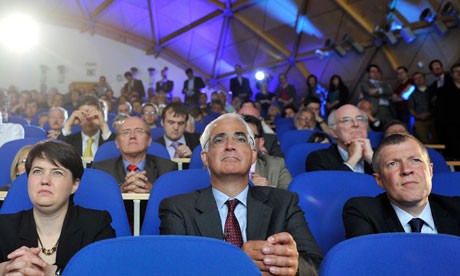
So if we take Brown as an authoritative spokesman on Scottish Labour policy – and it seems eminently reasonable to do so – we can safely assume that the only other party with even a chance of power in either Holyrood or Westminster has no intention of devolving anything substantial to Scotland any time soon. The petty tinkering of the Calman Commission/Scotland Act does indeed appear to be the limit of devolutionary ambition. And if you think about it, it’s hard to see how it could be any other way.