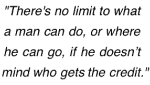
…seems to be the underlying message of a faintly extraordinary blog by Simon Johnson in the Telegraph today. Reacting to the suggestion (which appears to be solely his own) that the SNP will stage the independence referendum in 2014 to take advantage of patriotic events like the Commonwealth Games and the 700th anniversary of Bannockburn, Johnson suggests that the plan could backfire.
"2014 is also the 100th anniversary of the outbreak of the First World War and the 75th anniversary of the Second World War. This would provide the Unionists with ample opportunity to remind the Scottish people how they stood together with the English, Welsh and Northern Irish to defeat Nazism."
It's a fair point, and if by 2014 the Nazi threat is indeed once again looming over Europe, it may well affect the outcome of the referendum. But if the Unionists are already reduced to crossing their fingers for the rise of a new Hitler to stop the SNP, it would seem they're in even more desperate straits than anyone thought.
Category
disturbing, media
Iain Macwhirter on his own blog, acting like a proper grown-up journalist and actually doing the research on the "Would Scotland be allowed into the EU?" debate:
"I've just been looking at the latest report to hit the front pages. It came from the House of Commons Library and it is a background briefing note, not an authoritative assessment of the Scotland's legal status within the EU. It carries its own health warning: "[This briefing note] should not be relied upon as legal or professional advice or as a substitute for it. A suitably qualified professional should be consulted.""
Category
europe, media, scottish politics
One of the most dismaying aspects of the state of Scottish politics is the way that the weekly Holyrood joust between the party leaders appears to be conducted solely for the benefit of those in the chamber, with no regard at all for the watching electorate. This week's episode was a case in point.

Iain Gray chose to spend his entire allotted time battering on about whether an independent Scotland would automatically become a member of the EU, and under what conditions, particularly in terms of currency. This, we'd hazard, is somewhere near the bottom of the average voter's priorities at the moment – given that we're several years away from having to think about it, and that the way things are going you wouldn't necessarily want to bet your mortgage on the EU and/or the Euro existing at all by then – but the opposition sense a weakness (not unreasonably) in the Scottish Government's disappointing refusal to release its legal advice on the subject, and so we get a concerted attempt to score a fairly meaningless playground point rather than usefully addressing any real-world issues of actual concern to the Scottish people.
As the session showed, the simple fact is that nobody knows what will happen with regard to Scotland's EU membership in the event of independence, not least because it's a decision wholly outside the influence of anyone in Holyrood. Both sides were able to quote a litany of sources supporting their respective views, none of them in any way definitive, and the exchange ended with nobody any the wiser, resulting only in the generation of massive heat but absolutely no light. (FMQs does seem to be a bottomless well of the former, and so is perhaps the ultimate in renewable energy sources. Who needs oil?)
Ruth Davidson's debut appearance at the front of the Conservative benches was no better than Gray's ineffectual jabbing, pointlessly repeating the futile demand that the Unionist parties have been making for the past seven months – namely that the SNP should hold the referendum immediately. It's perhaps fitting that on the eve of Armistice Day, the spiritual leader of the Union would choose to adopt the Douglas Haig approach to battle: if you've got a strategy and it's failing again and again and again, keep doing it anyway just in case the 50th time is the charm. The SNP are extremely well entrenched on the high ground here – having clearly laid out their proposed timing in the election campaign and getting an unprecedented mandate from the electorate – and Davidson's feeble shelling didn't so much as scuff the barbed wire.
Willie Rennie's question was so boring we've forgotten it already, and the entire spectacle was an unedifying waste of everyone's time. And since the agenda of FMQs is set by the opposition leaders, for that they must carry most of the blame.
Tags: fmqs
Category
media, scottish politics
Ever since the SNP's victory in May, Unionist politicians of all flavours have been going on and on about making "the positive case for the Union", a thing which apparently exists but which none of them have as yet been able to actually define. The only specific example of this positive case so far has come from the new Scottish Conservative leader Ruth Davidson, who pointed out that being in the Union enabled us to enjoy the performances of the GB team at the Olympics.
(An event which has directly sucked money out of Scotland and down to London, and which mystifyingly enjoys a different tax status to the forthcoming 2014 Commonwealth Games in Glasgow, which our sources tell us is in Scotland.)
Over on Better Nation, though, Labour activist Aidan Skinner (one of the few who seems to have any grasp of the scale and nature of the party in Scotland's predicament) has had a stab at it. Apparently the "coherent and convincing" case for the Union is that it enhances Scotland's "shared defence and commercial interests".
Further details are unforthcoming in the piece, however, which raises more questions than it answers. It doesn't explain, for example, how Scotland's interests are served by years of UK government underspending on defence in Scotland (as identified by Professor Andrew Hughes Hallett), the siting in Scotland of nuclear weapons which are overwhelmingly opposed by the Scottish electorate, or UK foreign policy which makes the entire UK at greater risk of terrorist attack. Nor, oddly, is any nation state which poses a military threat to Scotland identified.
Similarly, the single sentence devoted to this "coherent and convincing case" neglects to clarify any specific instances of Westminster control of Scotland's economy bringing commercial benefits. We're sure there are many, though, and look forward to reading them when the No campaign finally gets round to publishing "The Positive Case For The Union" through Her Majesty's Stationery Office, which we're currently expecting some time around 2017.
Tags: the positive case for the union
Category
media
The Scotsman's lead politics story today is a fairly bog-standard run through the "too wee, too poor, too stupid" routine. The line is that if Scotland was independent AND in the Euro it would be liable for an £8bn contribution to the Euro bailout fund. It's an assumption constructed entirely from individual building-blocks of nonsense piled up on top of one another (Scotland isn't going to be independent for four or five years at least, and nobody knows what the status of the Eurozone is going to be four or five days from now, never mind half a decade; the SNP have clearly stated that their policy on independence would be to retain Sterling for an inspecified period of time; the issue of whether an independent Scotland would be an EU member at all, and on what terms, is contentious to put it mildly; and so on), and indeed below the thunderous headline the piece grudgingly acknowledges them, but we should probably expect the Scotsman to keep banging away at the issue of Scotland's pathetic inadequacy as a prospective nation every day or two from now until the referendum.
Tags: too wee too poor too stupid
Category
europe, media, scottish politics
Time has an interview with Alex Salmond today. The US-based magazine has a commendable stab at covering a fairly alien subject, but drops a number of clangers of varying bizarreness. They initially claimed the SNP had formed a coalition with Labour in 2007, but have since (semi-)corrected that to the slightly less-wrong but nonsensical assertion that "the SNP formed a minority government with Labour". In the next sentence they note that "The party's growth has spiked, from six seats in 2005 to an outright majority of 69 seats after a landslide victory earlier this year", rather misleadingly neglecting to point out – or perhaps to know – that they're comparing Westminster election results to Holyrood ones.
There's a real cracker a couple of paragraphs further on, though, when the magazine suggests that "A Sunday Mirror poll out in mid-October found that 49% of Scots and 39% of Britons overall support independence, up from 11% and 6%, respectively, five months ago". Blimey, we knew there was an upwards trend, but 11% to 49% in five months is a little much. (Even if you assume it's just a rogue extra "from" that's snuck in, we're not sure there's been a poll with 38% support for independence recently. Also, the 49% figure is presumably the poll that was built from a tiny Scottish sub-sample, and therefore pretty much meaningless anyway.)
Next up we get "Salmond plans to hold a referendum on independence before the end of his term in 2015", but we'll forgive them that one because countless UK and even Scottish media outlets have made the same careless error – the current Holyrood term ends in 2016, not 2015. Less forgivable (though also perpetrated repeatedly by the UK media) is the bald statement that "The referendum will have two questions", since that has never been the official position of the SNP or anyone else, and is looking less likely to be the reality with every passing day.
But, y'know, otherwise bang on the money, guys.
Category
media, scottish politics
A fairly in-depth lead piece on the "devo max" conundrum, including an interview with referendum expert Dr Matt Qvortrup who, under very determined and persistent questioning from an unhappy Glenn Campbell, offered the professional opinion that a notional two-question poll where Q1 was "Do you want more powers for the Scottish Parliament?" and Q2 was "Do you also want full independence?" would be both legitimate and fair, and also that in his view, a vote of 51% for independence in such a scenario would mean independence for Scotland, regardless of whether the "devo max" question received a higher vote.

The unambiguous clarification of Dr Qvortrup's position was welcome given the strenuous attempts by the Unionist parties to misrepresent it last week, after the First Minister gave what turned out to be an entirely accurate summary of Dr Qvortrup's views, but one based on an erroneous source. Dr Qvortrup confirmed that he'd spoken to the First Minister and accepted his "misquote" was an honest error rather than an attempt to portray his views inaccurately.
The episode also featured a piece on whether the Scottish Conservatives can recover from the divisions caused by their leadership contest, in which party donor John McGlynn called for a change in direction.
Category
analysis, media, scottish politics
Not a great deal going on in the papers today. The Herald and Scotsman both cover a mildly interesting story about prospective Scottish Labour leader Johann Lamont acknowledging – unusually for the party – that the Scottish people might vote Yes in the referendum, and talking of Labour's role in a post-independence Scotland.
Meanwhile, back on the party's more traditional ultra-Unionist wing, veteran Nat-basher Brian Wilson pontificates at length in the Scotsman on another variant of the "too wee, too poor, too stupid" line, this time focusing on issues relating to Scottish Power and whether its renewable energy would find an export market post-independence. The piece appears to concentrate mostly on the cost of transmitting electricity from the furthest extremes of the country – Orkney and Shetland – and makes no mention of that which would be generated on or closer to the mainland. It also plays heavily on the idea that England might prefer to import energy from Russia than Scotland, which seems a bit of a stretch.
The same publication offers some balance in the form of a rather rambling diatribe from SNP MSP Joan McAlpine, which is constructed mostly from suggestion and innuendo but does contain a small nugget or two for analysts to chew over with regard to the Scotland Bill, not least the writer's assertion – heavily qualified with "personal opinion" disclaimers – that given a choice between accepting the entire Scotland Bill as it stands or rejecting it outright at Holyrood, she'd opt for the latter.
And that's pretty much your lot.
Category
media, scottish politics
A very welcome piece in the New Statesman on the much-propagated lie that Scotland is subsidised by England. Could do with linking some of its sources, but still a worthwhile non-partisan reference. Also features a comment debunking another myth, namely the one that Labour need Scottish MPs to form a majority at Westminster. (Details appended below the jump.)
Read the rest of this entry →
Category
media, scottish politics, uk politics
The Scotsman presents a deeply twisted spin on the latest Scottish constitutional poll today as their headline story. Under the headline "SNP under pressure as Scots back change", they report the TNS poll for the BBC which shows the results of a three-option either-or question asking voters to pick their favourite from the status quo, devo max and independence. The poll essentially shows a three-way tie, but the paper reports it highly misleadingly, particularly in this passage:
"…independence, support for which, according to the poll, has fallen 11 percentage points from the 39 per cent backing in a survey published in September."
The September poll being referenced, however, asked a radically different question – it offered respondents just two options, independence or the status quo, with no devo-max. It's hardly surprising that independence scored higher in a two-option poll than a three-option one (the status quo did too), and as such the Scotsman's interpretation borders on an outright lie. Even by their normal standards, it's an unusually clumsy and blatant effort at misrepresenting the reality.
In fact, as quietly noted by the Herald in the middle of a piece on new Scottish Conservative leader Ruth Davidson, "The nearest comparison with the latest poll was a three question one by Ipsos-Mori a year ago which had 22% for independence, 44% for more powers and 32% for no change." In other words, the BBC survey represented support for independence growing significantly, at the expense of both devo max and the status quo – the exact opposite of the Scotsman's spin.
It's also interesting that a poll showing devo max as – albeit narrowly – the most popular option is described by the paper as putting the SNP under pressure. The SNP have repeatedly expressed their willingness to include a question on devo max in the forthcoming referendum, while all the opposition Unionist parties oppose one. It is they, not the SNP, who are refusing to countenance offering the people the thing they continue to favour the most, and one might imagine that it would be they rather than the nats who would therefore be placed under pressure by this poll.
Category
media, scottish politics
Iain Macwhirter in the Herald with a much-needed skewering of the "cybernat myth" that Labour have doggedly been trying to make stick for a few years now, and which was escalated dramatically with Iain Gray's vitriolic and bitter farewell speech to the Scottish Labour conference. There is, of course, poison aplenty on both sides of the SNP-Labour divide, but the most immediately noticeable difference is that nationalist bile and trolling comes from a few anonymous nutjobs on messageboards, whereas in Labour's case it comes from elected members and official representatives. We don't recall any SNP MSP comparing the Labour leader to Hitler, Mussolini or Mugabe, nor calling the entire party "neo-fascists", yet those insults and more have all been made in full public view by taxpayer-funded Labour politicians. Gray and Labour's attempt to claim the moral high ground is an extraordinary piece of brass neck, and it's good to see a grown-up journalist calling it out.
Category
media, scottish politics
There’s been some truly horrible stuff passing for videogames journalism in recent times. Whether it’s reviewers telling people to hand over £25 for a shoddy, lazy cash-in because it comes in a cardboard box or writers arguing with each other over the precise manner in which gamers should be gouged for more money, it’s a depressing picture. (And having the president of IGN tell MCV last week that the recipe for the future was “getting celebrities involved“ didn’t paint it any prettier.)

I’ve always believed that writers are there to serve their readers, not their subjects. But as I was bemoaning the last case in a cloud of gloom and shame-by-proxy last month, I had a bit of an epiphany, and it wasn’t a particularly cheering one. Because the truth of the matter is that readers are getting the videogames journalism (indeed, the journalism generally) that they deserve.
Read the rest of this entry →
Category
analysis, media, videogames